
ScaleAlphaSi is a digital marketing agency in Kansas City that runs SEO, AEO, GEO and paid ads under one strategy. We map keywords to buying intent, structure pages for answer engines, then move ad budget toward channels producing qualified leads.
Buyers no longer search in one place. They ask Google, read an AI answer box, query a chat tool and click an ad, often in one afternoon. A plan that covers only one of those leaves the others to competitors.
Digital marketing agency in Kansas City
A digital marketing agency plans, builds and manages the channels that bring buyers to your business. For a Kansas City company in 2026, that means four channels run from one plan: search rankings, AI answer boxes, AI chat recommendations and paid ads. Each channel is measured against the same starting data before any work begins.
Digital marketing agency: a partner that researches how your buyers look for help, builds the pages, answers and campaigns that reach them, then reports which work produced leads.
The opening is still wide. The Census Bureau's Business Trends and Outlook Survey (opens in a new tab) found that 17 to 20 of every 100 U.S. firms reported using AI in each survey from December 2025 to May 2026.
Among firms with no more than four employees, under 20 in 100 used AI. Among firms with 250 or more employees, 37 in 100 did. Most small rivals have not started, so the field is still open.
What wins local search rankings?
SEO is the technical and content work that lifts your pages in Google or Bing results, including the local map. It rests on three things: a fast, well-structured site, one clear page per service, and a complete Google Business Profile that matches every listing across the web.
Search Engine Optimization (SEO) is the work that helps your pages rank on Google and Bing for the terms your buyers type.
The core tasks:
- Technical health: fast load times, clean page structure and no broken links.
- Service pages: one for each service and area, written around real buyer questions.
- Local listings: a complete Google Business Profile with consistent name, address and phone details.
- Reviews: a steady flow of fair feedback requests, answered in your own voice.
Reviews carry weight in local results, so they have to be genuine. The FTC's Consumer Reviews and Testimonials Rule (opens in a new tab) took effect on October 21, 2024.
Its staff guidance is direct: "The business could be liable if it wrote or created fake or false reviews or if it purchased consumer reviews that it knew or should have known were false."
Our guide to managing reviews with AI covers a compliant request process.
Answer engines reward direct replies
AEO structures your pages so search engines and voice assistants can lift a short, direct reply to show as the answer. Those spots hold only one or two winners, so the page that states the clearest reply near its top is the page that gets quoted.
Answer Engine Optimization (AEO) is the work that makes your business the answer when a search engine shows an AI-written summary or a voice assistant reads one aloud.
In practice, AEO means three changes to each key page:
- A 40 to 60 word reply to the main question, placed near the top.
- Question-style headings that match how buyers phrase a search.
- Structured data that tells search engines your services, hours and coverage area.
Why do AI tools recommend one firm?
GEO earns your business a mention when someone asks ChatGPT, Gemini or a similar tool which company to hire. These tools draw on facts published across the web, so the work centers on consistent facts about your company and trusted mentions in the places those tools read.
Generative Engine Optimization (GEO) is the work that gets AI chat tools to name your business in their recommendations.
The GEO checklist:
- State who you serve, where and what sets you apart, in the same words on every profile.
- Earn mentions and reviews on the directories AI tools cite.
- Publish content AI tools can quote, such as plain FAQs and clear service pages.
- Check what the tools say about companies like yours, then close the gaps.
Our guide on how to show up in AI search goes deeper on AEO and GEO together.
Where paid ads fit the plan
Paid ads target in-market buyers today. SEO, AEO and GEO build visibility that compounds over months. The value is in the management: ongoing search term analysis, negative keywords that block wasted clicks and tracking that ties every call or form to the campaign that produced it.
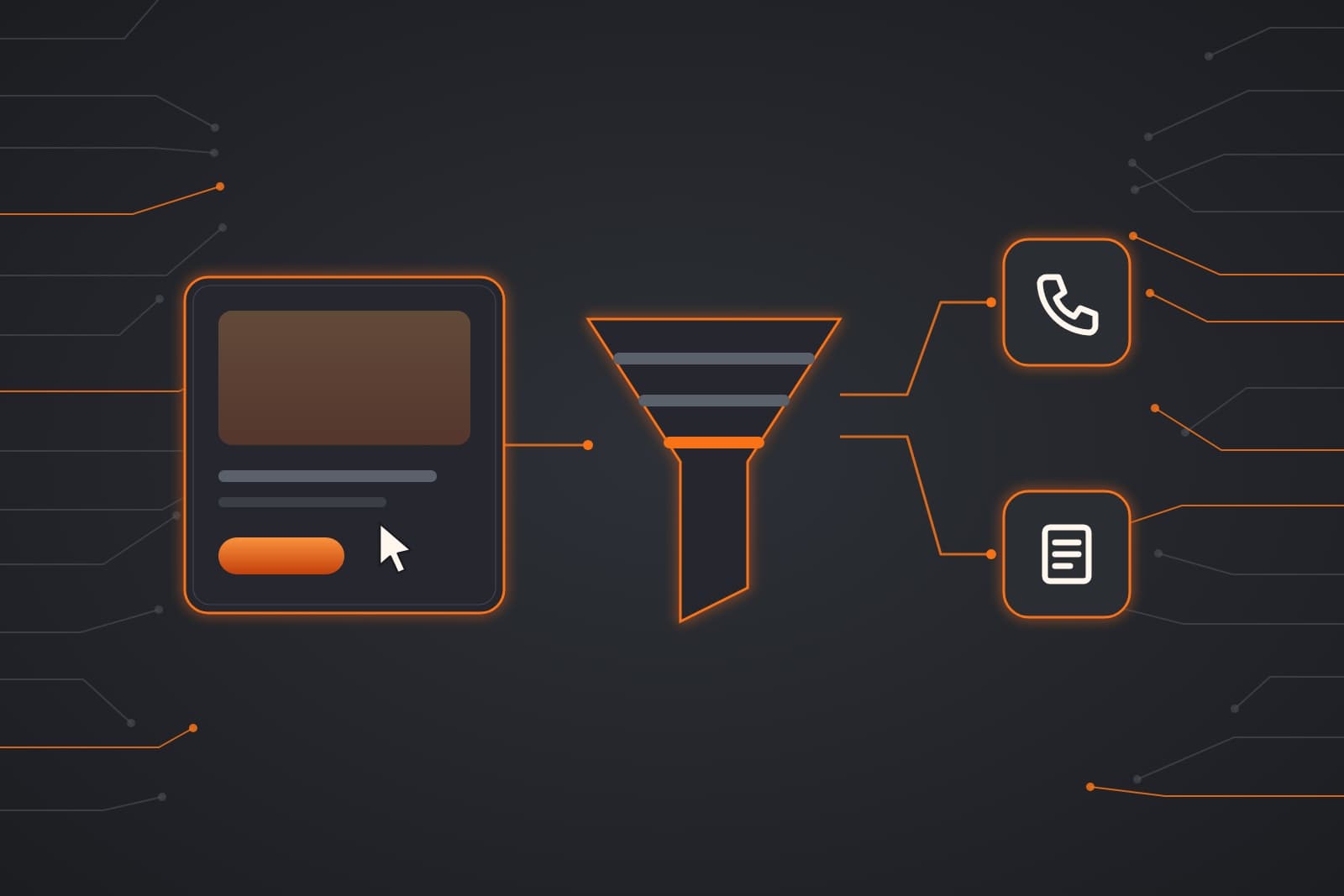
We run campaigns on Google, Meta, Microsoft and other platforms where your buyers spend time.
Each month we review the search terms that triggered your ads, cut the ones that bring clicks without customers, then shift budget toward the campaigns producing calls and form fills.
Our guide to AI marketing for small business explains where AI drafting helps and where your team keeps approval.
SEO, AEO, GEO and ads side by side
Each channel reaches buyers at a different point, so each one wins on different signals. SEO rewards technical quality, AEO rewards clear replies and GEO rewards consistent facts with trusted mentions. Paid ads depend on disciplined targeting, and the table below shows where each channel puts you.
| Channel | Where you show up | What wins it |
|---|---|---|
| SEO | Google and Bing results with the local map | Fast pages, one per service, with a complete Google Business Profile |
| AEO | AI answer boxes and voice assistants | Short, direct replies to the questions buyers ask |
| GEO | ChatGPT, Gemini and other AI tools | Clear facts with trusted mentions across the web |
| Paid ads | Google, Meta, Microsoft and more | Search term analysis with tracking that ties spend to leads |
The channels overlap. A clear page with a direct reply near its top helps all three organic channels at once, which is why we plan them together.
What happens in each engagement step?
Every engagement follows four steps. We measure a baseline, write a prioritized plan, launch and manage the work, then report the change side by side. The baseline comes first so each later result is benchmarked against real starting data, never against a guess about where you began.
- Baseline: we check seven measures: search rankings, website traffic, leads, answer visibility, AI recommendations, paid ad results and competitors.
- Written plan: a plain-English plan shows where you stand, where competitors win and what we will do first.
- Launch and manage: we build each page, answer block or campaign, then study search terms month after month.
- Side-by-side report: we measure the same seven areas again, then show what moved and which work drove it.
The full process sits on our Marketing page, with each channel and step laid out in one place.
What sets our approach apart?
Our approach treats marketing as the first half of growth, with AI agents as the second. Search, answers and ads bring the buyers first. Once inbound volume outpaces your team, AI agents take over intake, follow-up and booking, so new leads get a fast reply while your people handle the judgment calls.
What that looks like in practice:
- One partner, two disciplines: growth marketing and AI engineering run inside one team, under one plan.
- Measured from a baseline: every channel is benchmarked against the same seven metrics before work begins.
- Leads, not clicks: call tracking and form attribution tie each inquiry back to its source channel.
- Kept current: scheduled reviews update your pages and ad accounts as AI tools change how they choose.
- Local: we are an owner-run team based in the Kansas City metro.
When leads start to grow, our AI Agents handle the extra calls, messages and booking requests. You can try any agent free for 30 days.
What should you ask before hiring?
Ask any agency how it measures results, who owns your accounts and what it does when AI tools change. A strong answer names a baseline, shows a sample report and explains how budget moves between channels. A weak answer promises a top spot on Google or in AI tools, which no provider controls.
Questions worth asking on the first call:
- What will you measure before any work begins?
- Which channel do you recommend first for my business, and why?
- How do you track a lead from first click to booked job?
- Who owns the ad accounts, listings and content if we part ways?
- How often do you review the plan, and what triggers a change?
Frequently asked questions
What does a digital marketing agency do?
A digital marketing agency plans, builds and manages the channels that bring buyers to your company. Ours covers SEO, AEO, GEO and paid ads under one plan, measured against a baseline before any work begins.
What is the difference between SEO, AEO and GEO?
SEO helps your pages rank in regular search results and the local map. AEO makes you the short answer in AI answer boxes. GEO gets AI chat tools such as ChatGPT to name your company.
Do I need paid ads if I invest in SEO?
Often, yes. SEO builds visibility that grows over months, while paid ads target in-market buyers today. Running both lets ads cover the gap while organic rankings climb, with budget shifting as each channel proves itself.
How do you show that the marketing worked?
We measure seven areas before work begins, then measure them again after. The side-by-side report shows rankings, traffic, leads, answer visibility, AI recommendations, ad results and competitors, with the work that drove each change.
Where do AI agents fit in?
AI agents come in once marketing brings more inquiries than your team can answer quickly. They handle calls, messages and booking around the clock, while your people keep every decision that needs judgment.
Next step
Book your free consult meeting. We will review how buyers find you today, where competitors appear ahead of you, and which channel should come first for your business.
Our standards
- The examples in our guides are illustrations, not customer stories.
- Your AI runs on private and on-premise models, not public AI tools, and nothing you give us is used to train AI models.
- Agents are built so each action is logged in a record that shows any later edit.
- Every call and text opens with a short line saying it is the business's AI assistant, and asking for a person always works.
- Texts go only to people who contacted you or gave you permission, and every message says how to stop.
- If anyone may be hurt or in danger, the only instruction an agent gives is to call 911.
- Depending on the investment package you choose, you get either the right to use the software we build for you or full ownership of it.
- We work from the Kansas City metro and meet owners face to face or by video call.
- Same team. Same jobs. More capacity.
About the ScaleAlphaSi team
ScaleAlphaSi is a Kansas City AI advisory firm specializing in Advanced Marketing and AI Engineering. We advise small businesses, trades and growing companies on where AI fits first, then design the agents with the custom software to deliver it. Each guide draws on our work with owners and office teams. It covers where AI pays off, where your people stay in charge and how to begin with a single workflow.
Meet the team