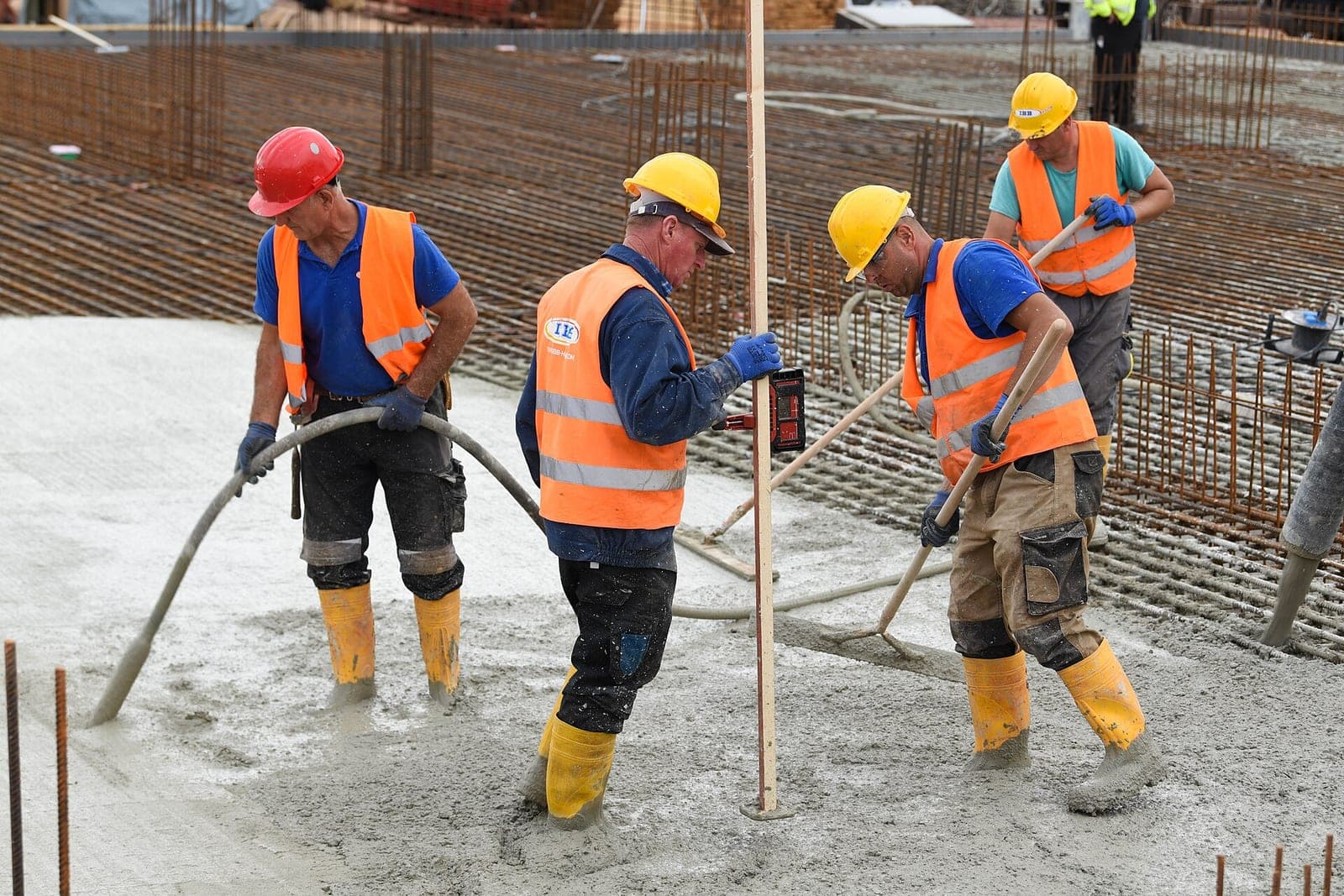
Estimating software for concrete contractors should do your flatwork math the way you already do it, then get a clean bid out the same day. That means square footage and thickness turned into yards, tear-out and haul-off priced in, reinforcement and finish chosen, and a follow-up that goes out on its own. The contractor sets every number. The software just stops the bid from sitting in a truck for a week.
This post is for owners of concrete companies who pour driveways, patios, sidewalks and footings and spend their evenings writing bids. It walks through what goes into a flatwork estimate, where off-the-shelf tools fall short, and what a custom build looks like. If the scheduling side is your bigger headache, our post on concrete scheduling covers pours, weather and crews.
What goes into a concrete flatwork estimate?
A flatwork estimate is the job broken into the parts that cost you money. Every concrete contractor names them a little differently, but the list is close to the same. It runs from area and tear-out through base, reinforcement, finish and access, and a missed line comes out of your margin.
- Area and thickness. Length times width, minus cutouts, at the depth the job needs. Your math turns that into cubic yards, plus the extra you always order.
- Tear-out and haul-off. Breaking the old slab, loading it and dumping it. Often the line that surprises the customer most.
- Base and grading. Gravel, compaction and any dirt work to get the grade right.
- Reinforcement. Rebar, wire mesh or fiber, chosen by the job and your standards.
- Forms and joints. Form boards, expansion joints, saw cuts.
- Finish. Broom, stamped, colored or exposed aggregate. Each one changes labor and time.
- Access. Can the truck back up to the pour, or do you need a pump or wheelbarrows? A tight backyard patio is a different job from an open driveway.
- Extras. Steps, a sealer coat, drainage, permits where your area needs them.
Get those right and the bid is right. Miss one and the margin goes with it.
Why do concrete estimates take so long?
Because the walk, the math and the writing happen in three different places. The measurements are on a notepad, the price sheet is in your head or a spreadsheet, and the bid gets typed at night. Software that keeps all three in one place cuts the hours between the walk and the send.
Then the customer asks for a second option, say broom finish versus stamped, and the whole thing starts over. Meanwhile two other contractors already sent numbers. Speed is not about rushing the price. It is about cutting the hours between the walk and the send.
Is there a concrete quote calculator that works for real jobs?
A simple concrete quote calculator works for a rough idea, not a bid. It can turn square feet and thickness into yards, but it does not know your tear-out rates, your finish crews or that this backyard needs a pump.
What helps is a calculator built on your own numbers and kept for your team. Your estimator enters the measurements and picks the options. The tool pulls your prices, adds the lines you always include, and drafts the bid. Your estimator checks it, changes what needs changing and sends it. A public calculator on your website can still be useful for homeowners, as long as it gives a range you approve and asks them to book a walk.

What is the best estimating software for concrete contractors?
The best estimating software for concrete is the one that matches how you bid. Off-the-shelf tools make you price their way, with their line items and their templates, and most were built for general contractors or big commercial takeoffs. A tool built on your own price book fits a flatwork shop better.
Small and mid-size flatwork contractors often need something narrower:
- Your own price book, with your rates for each finish and thickness
- Options side by side, so a customer can compare broom and stamped on one page
- Photos from the walk attached to the bid
- A bid that becomes a job, then a pour on the schedule, when the customer says yes
- Job costing that compares the estimate to what the pour really took
That is the kind of system we build. On our Solutions page it falls under full web applications: a quoting and proposal engine built from your price book, with e-signature and a quote that turns into a job when accepted. Under the federal E-SIGN Act (opens in a new tab), a signature or contract generally can't be denied legal effect just because it is electronic. For a concrete company we shape it around your walk, your math and your finishes, and tie it into the calendar and accounting software you already use. AI drafts the bid from the estimator's measurements and notes. People set the prices and decide what goes out. Your data and logins stay yours.
If you want to see how bids connect to profit after the pour, our guide to job costing software for contractors goes deeper.
Follow-up on open bids
Most concrete bids are not lost to a lower price. They are lost to silence. The homeowner meant to call back, then the weekend came. The fix is a polite follow-up in your words, sent on a schedule, with any question routed straight to the estimator.
A good system sends a short follow-up a couple of days after the bid, and another later if there is no answer, in your words. If the customer replies with a question, it goes to the estimator. If they say yes, the job moves to scheduling. Only text people who contacted you or gave you permission, and make opting out easy. FCC rules on automated texts (opens in a new tab) let people opt out at any time and in any reasonable way, even if they agreed before. Our post on quote follow-up automation covers the timing in more detail.
What stays with the contractor
The contractor keeps every decision that puts money or reputation on the line. That means each price, rate and markup, the call on whether the base is sound and what reinforcement the job needs, and every promise about pour dates and how the finish will look.
- Every price, rate and markup
- Whether the base is good or the old slab hides a problem
- Which reinforcement and thickness the job needs
- Discounts, payment terms and deposits
- Promises about pour dates and how the finish will look
- Upset customers and warranty questions
Same team. Same jobs. More capacity.
A driveway bid, start to finish
This is an illustration, not a customer story.
A concrete contractor walks a cracked driveway on Monday morning. He measures it on his phone, notes the old slab needs to come out, takes photos of the tight turn at the street, and picks mesh and a broom finish. The homeowner asks what stamped would look like.
By lunch the system has drafted a bid with two options from his price book, tear-out and haul-off included, and a note about the truck access. He bumps one labor line, approves it, and it goes out with the photos. Wednesday the homeowner gets a friendly follow-up. Thursday she picks the stamped option and signs. The job lands on the pour calendar, and the estimate sits next to the actual costs when the crew is done.
Frequently asked questions
Can the software measure a driveway from photos?
It can help, but the contractor's own measurements should drive the bid. Photos are best for showing access, cracks and the old slab. Some builds let a homeowner send photos first so the estimator knows what to expect before the walk.
Will it work for commercial concrete bids too?
It can, if we build it for that. Commercial bids often need plan takeoffs and different line items. Many flatwork contractors start with residential bids and add commercial later.
Can we keep our current bid format?
Yes. A custom build can match the layout your customers already know, with your logo and wording. That is one of the main reasons to build rather than buy.
How long does a concrete estimate stay valid?
You decide, and the bid should say so. Material costs move, so many contractors set an expiry date and let the system remind the customer before it passes.
Next step
If bids are piling up in the truck, book a free workflow consult. We are based in the Kansas City metro and meet concrete contractors in person or by video. In the consult we look at how you walk a job, how you price it and where bids stall today, then sketch the estimating system we would build for you. You can browse the range of builds on our Solutions page first.
About the ScaleAlphaAi team
We are a Kansas City company that designs and builds AI agents and custom software for small businesses, trades and growing firms. We write these guides from our work with owners and office teams: what AI handles well, what stays with your people, and how to start with one workflow.
Meet the team