Reinforcement learning is a way to teach AI software by trial, error and reward, so it slowly repeats the actions that earn a good score. In AI the term names a method for computer systems, not the reward charts people use to shape habits at home.
The term turns up everywhere, and our plain-English AI glossary keeps the rest in one place.
Reinforcement learning explained with a dog and a treat
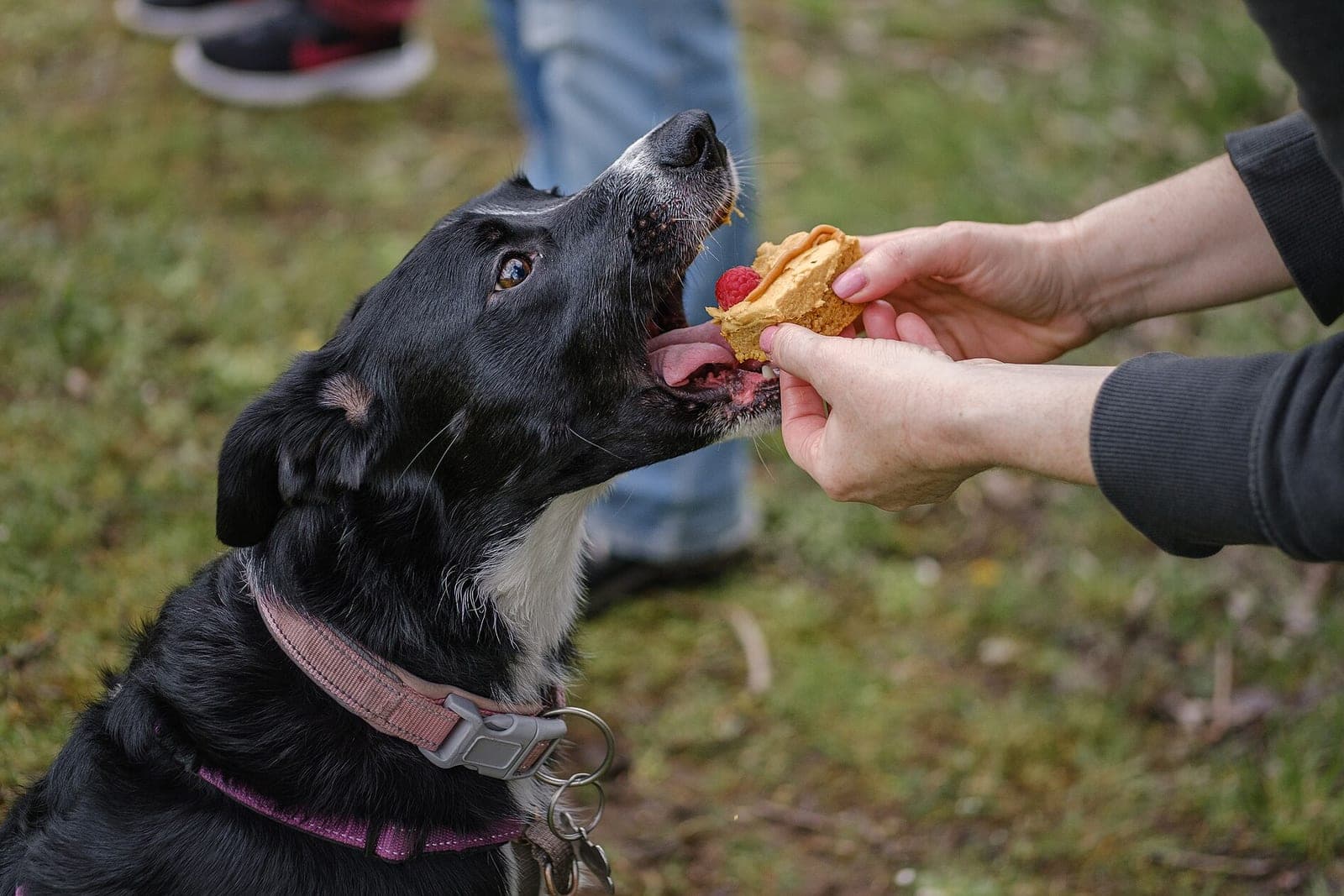
Reinforcement learning works much like teaching a dog to sit. The dog tries something, a treat follows the right move, and over many rounds it sits more often. The software does the same with a score in place of the treat, so actions that earn a higher score become more likely next time.
NIST's glossary entry on reinforcement learning (opens in a new tab) describes a model that acts, gets feedback from its surroundings and adjusts to earn more reward. Nobody hands the software a list of right answers. It finds out what works by doing. That is the reinforcement learning explanation in short.
Supervised learning is different. There a model is trained on examples with the right answers, often labeled by people, as NIST's entry on supervised learning (opens in a new tab) puts it.
How does the try, score and adjust loop work?
The loop is short, and it runs over and over. The software takes an action, a scoring rule hands back a reward or a penalty, and the software shifts toward what paid off. Run that cycle a very large number of times and the small shifts add up to a useful habit.
- Try. The software takes an action, such as a move in a practice puzzle.
- Score. A rule that people wrote gives that action a reward or a penalty.
- Adjust. The software nudges its settings toward whatever scored well.
The scoring rule is the part people control: the goal in a form a computer can count. So the method shows up in game-playing systems and planning tools, where a clear score exists. It is only one branch of AI, and generative AI vs traditional AI separates the tools that make content from the ones that sort and score.
How do people's ratings shape chat answers?
People's ratings are one way chat tools were tuned to give more helpful replies. Reviewers compare two answers and choose the better one. A model then picks up which kind of answer people prefer, and that preference becomes the reward for further practice.
It helps the big public chat tools sound polite, but it does not make them right. A rating rewards what a reviewer liked, and a liked reply can still be wrong.
This is also where fine-tuning and reinforcement learning overlap, since the ratings step gives a finished model extra practice. Reasoning models are often polished with rewards too, and our guide to AI reasoning explains their step-by-step working.
Why does a clear goal matter so much?
A clear goal matters because the software follows the score, not the intent behind it. If the scoring rule leaves a gap, the software can find a shortcut that earns points without doing the job. Builders call this gaming the reward, and it is a well-known weak spot.
Picture a rule that rewards short replies. The software could drift toward one-word answers that score well and help nobody. The fix is a better goal, careful testing and a person who checks real results.
The method also needs a great deal of practice, so it suits a simulation, where a wrong try is cheap and harmless.
What does this mean for the AI in your business?
The AI tools you use were shaped by methods like this long before they reached you. A business agent does not keep practicing on your customers or rewrite its habits from their replies. Your written rules, not a reward score, set what it may do.
Take a garage door repair company whose AI helper drafts replies to quote requests. The draft comes from a model polished partly with people's ratings, a reinforcement learning example hidden inside an everyday tool. The office manager reads each draft, adds the price and approves the final wording.
Our six AI Agents work on that footing, each one handling a single repeat job inside your rules. Rewards shaped the model long ago, and your people run the work today.
Frequently asked questions
What is an example of reinforcement learning?
A common example is software that gets better at a board game by playing it again and again and repeating moves that led to wins. Another is the way chat tools were tuned with people's ratings, so replies that reviewers preferred became more likely. In both cases a score guides the change.
How is reinforcement learning different from deep learning?
Deep learning and reinforcement learning answer different questions. Deep learning is about how a model is built, from layers of connected math that find patterns. Reinforcement learning is about how a model is taught, through trial and reward, and the two often work together.
Is reinforcement learning the same as fine-tuning?
No, they are related but not the same. Fine-tuning gives an already trained model extra practice on a narrower set of examples. Reinforcement learning is one way to do that practice, using rewards instead of example answers, so it can be part of fine-tuning without being all of it.
Next step
Book a free workflow consult and bring the chore your team repeats most often. We will walk through it step by step and mark each point where your team gives the final yes. We work from the Kansas City metro and meet owners face to face or by video call.
Our standards
- The examples in our guides are illustrations, not customer stories.
- Your AI runs on private and on-premise models, not public AI tools, and nothing you give us is used to train AI models.
- Agents are built so each action is logged in a record that shows any later edit.
- Every call and text opens with a short line saying it is the business's AI assistant, and asking for a person always works.
- Texts go only to people who contacted you or gave you permission, and every message says how to stop.
- If anyone may be hurt or in danger, the only instruction an agent gives is to call 911.
- Depending on the investment package you choose, you get either the right to use the software we build for you or full ownership of it.
- We work from the Kansas City metro and meet owners face to face or by video call.
- Same team. Same jobs. More capacity.
About the ScaleAlphaSi team
ScaleAlphaSi is a Kansas City firm specializing in Advanced AI Engineering. We design and build AI agents and custom software for small businesses, trades and growing companies. Each guide draws on our experience with owners and office teams: where AI delivers, where your people stay in charge, and how to begin with a single workflow.
Meet the team