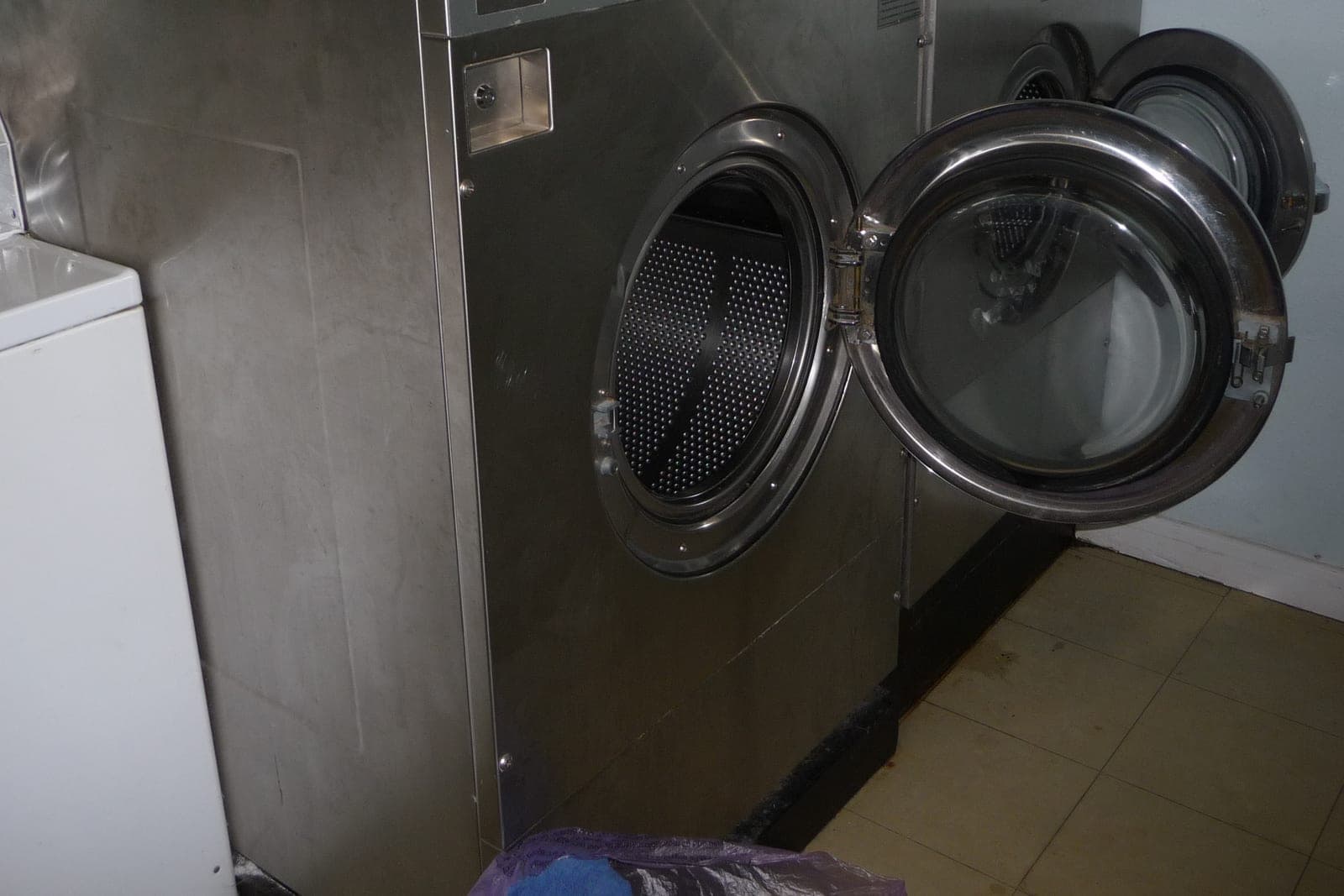
Laundromat management software keeps the wash-and-fold side of the business off paper tickets and out of staff memory. Each drop-off gets a ticket with the weight, the customer's preferences and a printed bag tag. A board shows every order by stage, and the driver gets a short pickup and delivery list.
This guide is for laundromat owners running or adding wash-and-fold, pickup and delivery, or commercial accounts. It sits with the other one-off trades in our guide to custom software for small business, and AI for small business shows where AI helps first.
What should laundromat management software handle?
Laundromat management software should handle the work around the machines, not the machines themselves. That means a drop-off ticket for each bag, tags that follow the bag from washer to folding table, an order board by stage, ready notices, a delivery list and monthly statements for business accounts.
Self-service laundry mostly runs itself. Wash-and-fold does not, so wash and fold laundry software starts at the counter. Each bag carries a name, a weight, the customer's detergent and folding wishes and a promise about when it will be ready, and every one of those details can get lost between the counter and the shelf.
The record behind each order holds:
- The customer. Name, phone, whether they agreed to texts and the date of any opt-out.
- The weight. Read from the counter scale at drop-off.
- Preferences. Detergent, folding style, hang-dry items and anything kept apart.
- Condition. A photo of any stain, tear or loose button found at drop-off.
- The stage. Washing, drying, folding, ready, out for delivery or picked up.
Why do paper tickets and handwritten tags mix up bags?
Paper tickets and handwritten tags mix up bags because nothing ties the bag to its record once it leaves the counter. A tag smudges in a damp cart, two bags from the same street look alike, and the folder works from memory. Then a customer calls about the order, and someone walks the shelves to check.
The calls are the quiet cost. Each "is it ready?" pulls a person off the folding table.

The usual tools each leave a gap for a laundry business:
- Paper tickets. Cheap and quick, but they cannot send a ready notice or show the owner a day's orders.
- Point-of-sale screens. Good at taking payment, thin on stages, preferences and bag tags.
- Boxed laundry management software. Often tied to one machine or payment vendor, and stiff about how your counter works.
- Spreadsheets. They can list commercial accounts but cannot follow a bag through the shop.
What we build: a wash-and-fold counter app, screen by screen
We build software for laundry business counters like yours: a drop-off ticket, printed bag tags, an order board by stage, ready notices, a pickup and delivery list and monthly statements for business accounts. Machines, card readers and payment systems stay with the companies that run them today, and the app never starts a washer or takes a card.
We build it as one of our small-business tools, with a simple login for the counter, the folders, the driver and the owner, and a link to your accounting software.
The drop-off ticket
Staff enter the customer, read the weight off the scale and note detergent, folding and hang-dry wishes. Any stain or damage gets a photo before the bag goes back. When an item's care label warns against washing or tumble drying, the ticket flags it and records the customer's choice. The FTC's Care Labeling Rule (opens in a new tab) requires clothing makers and importers to attach care instructions to garments, so staff can read the maker's instructions. If you charge by weight, check your state's rules for the scale.
Bag tags and the order board
The ticket prints a tag for every bag, so bags never mix between washers, dryers and the folding table. The board shows each order by stage, and staff move a card along as the bag travels through the shop.
Ready notices and the Customer Agent
When an order reaches the shelf, customers who said yes to texts at drop-off get a ready notice, and anyone can opt out by replying, which the laundromat honors the way FCC rules require. The FCC's guide to unwanted robocalls and texts (opens in a new tab) says marketing texts need written consent, while purely informational ones can rest on spoken consent, so ready notices stay informational and each yes is recorded. The Customer Agent answers "is my order ready?" from the board for those same customers and books pickup windows. Each reply is signed as the laundromat's AI assistant, and asking for a person always works.
Pickup and delivery
On route days, the laundry pickup and delivery software gives the driver a short list of pickups and drops, with a photo at each handoff. Addresses and gate codes show only to the driver on that route. The FTC's guide to protecting personal information (opens in a new tab) advises giving each employee access to just what the job requires, and we follow that as good practice.
Business accounts
Salons, gyms and rental hosts get their own account with bags kept apart and a monthly statement drafted from the month's orders for the owner to approve.
Depending on the package you choose, you get either the right to use the counter app we build or full ownership of it, and your customer list and order history stay yours under both.
How does the build run?
The pilot is one week of wash-and-fold at the counter, on the app beside the paper tickets, and we fix whatever slows the line. Before that week, the owner approves a written spec covering ticket fields, tag layout, stages, account rules and the wording of the ready notice.
Laundry service management software only helps if the counter likes using it. Once the pilot holds up, we add the delivery list and the business side and connect your bookkeeping software. Each action is logged, and customer records are never sold.
Before the paper tickets go away, we test these:
- A ticket cannot save without a customer, a weight and a tag.
- A bag tag scanned at the folding table opens the right order.
- A customer who did not agree to texts gets no ready notice, and an opt-out reply ends them right away.
- The delivery list shows only the driver's own stops.
- A business account's statement matches the month's orders line by line.
This is an illustration, not a customer story. Bernice runs a laundromat with a wash-and-fold counter and two rental hosts on account. A regular drops off a bag with a stained work shirt, and the counter snaps a photo before tagging it. By afternoon the bag is on the shelf, and because the customer agreed to texts, a ready notice goes out, and the customer can opt out. That week one host's linens ride the delivery list, and at month end Bernice approves that host's statement before it is sent.
What stays with your staff and manager?
Your staff and manager keep every call that needs a person: weighing and tagging each order, setting every price, deciding what happens when an item goes missing or arrives damaged, and picking which business accounts to take. The app keeps the records, and the Customer Agent answers from the board, but neither one sets a price or settles a claim.
- Weighing and tagging. Staff weigh and tag every order at the counter.
- Prices. The owner sets every price and every extra.
- Lost or damaged items. The manager decides, with the drop-off photos in hand.
- Accounts. The owner approves each monthly statement and each new business account.
Hosts sending linens out can read about a vacation rental cleaning app with photo proof per turnover. A bakery order management counter runs a similar pickup list with dated orders, and bigger delivery areas call for route optimization software.
Frequently asked questions
What is wash and fold service?
Wash and fold is a laundry service where the customer drops off a bag of everyday clothes and the laundromat washes, dries and folds it. The customer collects clean, folded laundry later or has it delivered. It is usually priced by weight, with any extras listed on the ticket.
How does wash and fold service work?
Staff weigh the bag at drop-off, write down the customer's detergent, folding and hang-dry wishes and tag the bag. The order moves through washing, drying and folding, then waits on a shelf. The customer comes back for it or gets a delivery at a time they chose.
How do you run a laundromat business?
Run a laundromat by keeping machines working, the floor clean and the counter organized. Self-service brings steady foot traffic, while wash-and-fold, delivery and business accounts add work that needs tickets, tags and one clear board, so no bag waits too long or goes missing.
What is commercial laundry service?
Commercial laundry service is laundry done for businesses rather than households, such as towels for salons and gyms or linens for short-term rental hosts. A laundromat usually collects on a set schedule, keeps each account's bags apart and bills once a month on a statement.
Next step
Book a free workflow consult and bring a week of drop-off tickets, a few bag tags and your list of business accounts. We will follow one bag from the counter to the shelf and mark each spot where a name or a weight was written twice. We work from the Kansas City metro and meet owners face to face or by video call.
Our standards
- The examples in our guides are illustrations, not customer stories.
- Your AI runs on private and on-premise models, not public AI tools, and nothing you give us is used to train AI models.
- Agents are built so each action is logged in a record that shows any later edit.
- Every call and text opens with a short line saying it is the business's AI assistant, and asking for a person always works.
- Texts go only to people who contacted you or gave you permission, and every message says how to stop.
- If anyone may be hurt or in danger, the only instruction an agent gives is to call 911.
- Depending on the investment package you choose, you get either the right to use the software we build for you or full ownership of it.
- We work from the Kansas City metro and meet owners face to face or by video call.
- Same team. Same jobs. More capacity.
About the ScaleAlphaSi team
ScaleAlphaSi is a Kansas City firm specializing in Advanced AI Engineering. We design and build AI agents and custom software for small businesses, trades and growing companies. Each guide draws on our experience with owners and office teams: where AI delivers, where your people stay in charge, and how to begin with a single workflow.
Meet the team