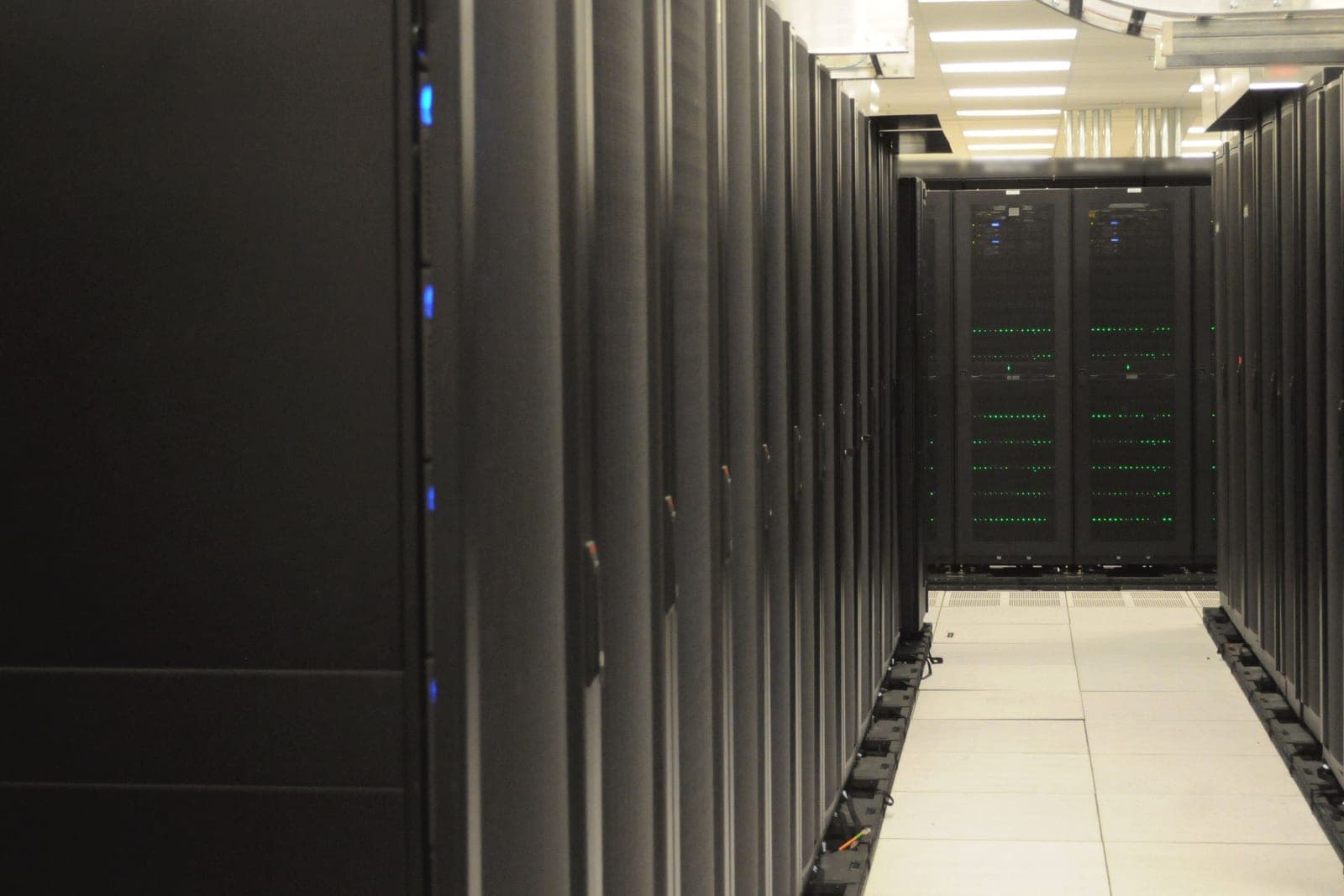
When a vendor mentions a vector database, they usually mean the storage behind AI that reads your own files. It stores each passage as a list of numbers describing its sense, so software can pull up text that says the same thing in different words.
The term shows up in sales pitches with little explanation. When a nearby word trips you up, the AI terms every owner hears are gathered in one plain list.
What does a vector database actually store?
A vector database stores two things side by side: a piece of your content, such as one policy paragraph, and a long list of numbers that sums up what that paragraph is about. That list is called a vector. Passages with similar meanings end up with similar lists.
The lists come from an AI step that scores a passage on many hidden traits at once. Those scores are called embeddings. The vector database is where they live, each pinned to its passage.
That is the vector database meaning in plain terms. Picture a paint store that groups colors by shade, not by name. Ask for "a soft warm white" and you reach the right rack.
Meaning search versus a word lookup
A regular keyword lookup finds rows that contain the exact terms you typed. A vector database finds passages whose meaning sits closest to your question, so it can bridge different phrasing. The two methods suit different jobs, and many systems run both together.
Say a customer types "trip fee" into a help box. Your price page calls it a "travel charge". A word lookup comes back empty. A vector database turns the question into its own string of numbers, compares it with the stored ones and returns the travel charge paragraph as the nearest fit.
The skill of finding text by meaning has its own name, and our guide to semantic search explains it from the searcher's side.
Where it sits when AI answers from your files
The vector database is the shelf an AI checks before it writes. When someone asks a question, the system searches the shelf for the closest passages, hands them to the AI and asks for a draft built on them. The AI itself does not store your files.
NIST's glossary entry on retrieval-augmented generation (opens in a new tab) treats the model and the retrieval system as two separate parts that work as a pair. The same entry notes that what the AI draws on can change without retraining the model. Update a policy, refresh its stored passage, and the next answer reflects the change.
To build the whole thing, start with an AI knowledge base for your business. Keeping past chats on hand is a separate design choice, which our post on whether AI remembers previous conversations untangles.
Do you need one?
It depends on how much you need searched and how often it changes. A shop with a handful of short documents can often get by with simpler search or by giving the AI the whole set at once. A larger, growing library is where a vector database starts to earn its place.
You should not have to make that call alone. A good builder looks at your files and questions, then picks the plainest setup that works. Vector database basics matter for asking good questions, not for picking software.
Who can find what
Search must never show a person a document they could not open on their own. The vector database should carry the same folder permissions your team already has, so a question from the front counter never surfaces payroll notes or an owner's private file.
That rule protects more than privacy. CISA's guidance on AI data security (opens in a new tab) ties the security of the data an AI uses to the accuracy and trustworthiness of what it produces. Loose permissions mean wrong eyes and wrong answers.
Our Admin Agent files documents where they belong and finds the right one when someone asks. It comes in our set of six AI Agents, fitted to the folders and permissions you already use.
At a trophy and engraving shop, a counter clerk asks for the approved layout notes on a repeat plaque order. The Admin Agent pulls the matching job file from the shared folder, and the clerk confirms it with the customer. The owner decides which folders the agent may search and who sees each one.
Frequently asked questions
How is a vector database different from a regular database?
A regular database, often called a relational database, stores facts in rows and columns and finds exact matches, such as an order number. A vector database stores passages with meaning scores and finds the closest match. A graph database is a third kind that tracks links between people, places or things.
Is a vector database the same as RAG?
No, a vector database is one part that RAG can use. RAG, or retrieval-augmented generation, is the whole pattern of finding relevant passages and handing them to an AI to write an answer. The vector database is often the storage and search piece inside that pattern.
What does vector database mean?
The phrase means a database built around vectors, which are lists of numbers that describe content. Each list acts like coordinates on a map of meaning. Passages with close coordinates say similar things, which is how the database finds a fit without shared words.
Next step
Book a free workflow consult and bring the folder your team digs through most. We will map how people search it today and where an AI could find the page while a person confirms it. We work from the Kansas City metro and meet owners face to face or by video call.
Our standards
- The examples in our guides are illustrations, not customer stories.
- Your AI runs on private and on-premise models, not public AI tools, and nothing you give us is used to train AI models.
- Agents are built so each action is logged in a record that shows any later edit.
- Every call and text opens with a short line saying it is the business's AI assistant, and asking for a person always works.
- Texts go only to people who contacted you or gave you permission, and every message says how to stop.
- If anyone may be hurt or in danger, the only instruction an agent gives is to call 911.
- Depending on the investment package you choose, you get either the right to use the software we build for you or full ownership of it.
- We work from the Kansas City metro and meet owners face to face or by video call.
- Same team. Same jobs. More capacity.
About the ScaleAlphaSi team
ScaleAlphaSi is a Kansas City firm specializing in Advanced AI Engineering. We design and build AI agents and custom software for small businesses, trades and growing companies. Each guide draws on our experience with owners and office teams: where AI delivers, where your people stay in charge, and how to begin with a single workflow.
Meet the team