Dog grooming scheduling software should know each dog as well as your best groomer does: the coat, the cut, how it handles on the table and when it should come back. In many shops those details live on paper cards and in someone's head. Rebooks get left to memory, and records get a follow-up by phone on the morning of the visit.
This guide is for grooming salons and mobile groomers, and it shows the app we would build around your own rules. For the bigger picture, see AI for small business. If you also offer overnight stays, our guide to dog boarding booking software covers runs and kennel nights.
What does dog grooming scheduling software need to remember?
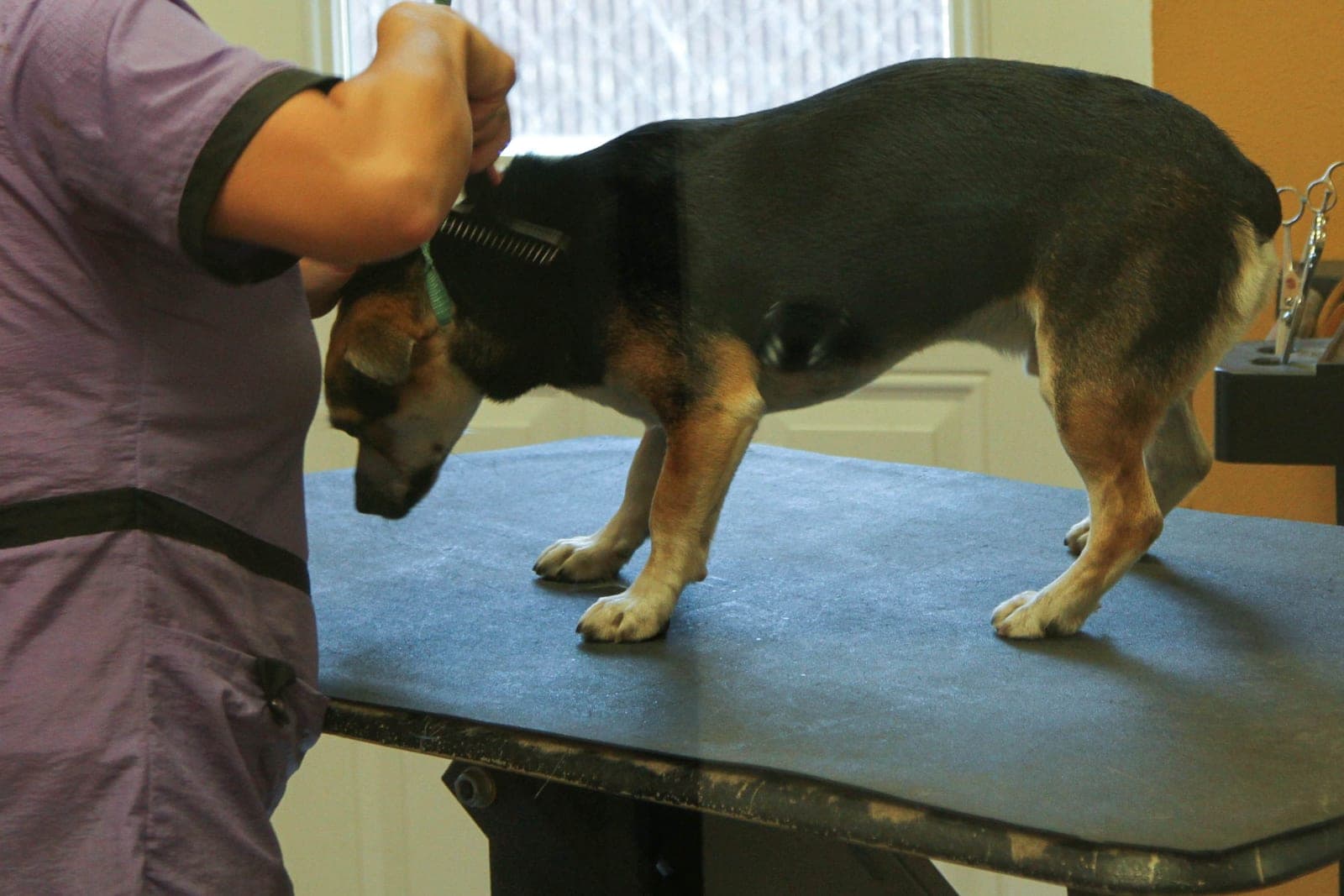
Dog grooming scheduling software needs to remember every dog, not just every time slot. A good card holds the breed, coat type, the usual cut, handling notes, the last visit's photos and when the dog is due back. Bookings pull from that card, so the groomer starts each dog knowing what worked last time.
The Bureau of Labor Statistics notes (opens in a new tab) that groomers also schedule appointments, sell products to owners and spot problems that may need a vet, and that some run mobile services that travel to clients' homes. That is a lot of front-desk work on top of the grooming itself. The card is where it all lands:
- The basics. Name, breed, coat type and the owner's contact details.
- The cut. The style, blade or comb length notes and anything the owner asked to keep.
- Handling notes. Nervous about nails, prefers the quiet table, needs two people for the dryer.
- Photos. Before and after shots from each visit, so the next groom matches.
- Records. Vaccination dates and the vet's name, under your shop's own policy.
Why do paper cards and booking apps fall short?
Paper cards and generic booking apps fall short because they hold either the dog or the time, never both. A card in a box has the notes but no calendar. A booking app has the calendar but treats a nervous doodle and a calm beagle as the same hour of work.
Each of the usual tools leaves a gap:
- Paper cards. The notes are there, but only for whoever is standing by the box.
- General booking apps. They sell time slots and know nothing about coats or handling.
- Spreadsheets. Someone has to remember to check who is due back.
- The van's phone. Stops and notes live in texts and call logs, scattered across a week.
Pet grooming scheduling software from a catalog can come close, but it bends your rebook rules and van routes to its own shape. Good software for dog grooming business owners starts from how the shop already works. Phones are a separate job, covered in our post on an AI receptionist for dog groomers.
What we build: dog cards, rebooks and the day sheet
We build one app around the dog card. Every booking, rebook reminder, record and photo hangs off that card. The groomer sets how often each dog comes back, the app books and reminds on that rhythm, and each morning the salon or the van gets a day sheet with the notes it needs.
The dog card
Breed, coat, cut, handling notes and photos, all on one screen any groomer can open from a phone or tablet at the table. The card also holds the dog's current weight and any flea or tick product applied that visit, because the EPA's flea and tick guidance (opens in a new tab) says to follow the label and use a product only on the species and weight it names. The app records what was used and never sets a dose. Some states license people who apply these products for pay, so check your state's rules.
Rebooks on the groomer's interval
The groomer sets each dog's rebook interval on the card. When a dog is coming due, the Customer Agent sends a reminder to owners who agreed to texts, with a link to pick a time, and anyone can opt out whenever they like. The shop honors opt-outs the way FCC rules require.
Records on file
Before a first visit, the Customer Agent asks the owner for current vaccination records, and staff accept each one before it counts. Your shop decides which records it asks for, so check your state's rules. If a dog ever bites someone, call 911 for anyone who needs care right away. After a bite, the CDC's rabies page (opens in a new tab) tells the person to ask the owner for proof of a current rabies vaccine, which is one more reason to keep dated records on file.
The day sheet
A salon's sheet lists each table's dogs in order with their notes. A van's sheet puts the stops in drive order, with gate and parking notes. Online requests from the dog grooming booking software land on the same sheet. This is where mobile dog grooming software earns its keep.
Deposits, no-shows and pickup
You set the deposit and no-show rules, and the app applies them the same way each time. When a dog is ready, owners who agreed to texts get a pickup note, and they can opt out at any time.
We build this as one of our small-business tools, with logins for you and your groomers and a link to your payment tool. Depending on the investment package you choose, you get either the right to use the app we build or full ownership of it.
This is an illustration, not a customer story. Kemal runs a mobile grooming van that covers a few suburbs. Each morning his day sheet shows six stops in drive order, with a note that the second dog hates the dryer. After the last groom, he marks a doodle's rebook interval a little shorter because of matting near the collar. The Customer Agent reminds that owner when the date comes up, and Kemal approves the new time.
How does the build run?
One salon or one van runs real bookings on the app for a few weeks first. Before that, you approve a written spec of your dog card, rebook rules, deposit rules and day sheet. We adjust the screens with the groomers as they work and connect your payment tool once the pilot holds up.
Before every groomer switches over, we check these:
- A rebook reminder goes only to owners who agreed to texts, and an opt-out stops the next one.
- A first visit cannot be confirmed until staff accept the dog's records.
- The van's day sheet lists stops in drive order with every dog's notes.
- A no-show follows your written rule, and any exception shows who approved it.
- Before and after photos land on the right dog's card.
Mobile detailers face a similar route problem, as our guide to auto detailing booking shows, but dogs bring coats, handling and rebook timing a car never needs.
What stays with the groomer and the vet?
The groomer makes every call about the coat, the cut and how to handle each dog, and decides when a dog should come back. Staff accept each record. Anything about skin, health or medicine goes to the owner's vet, and the app never gives that advice or suggests a product.
- Coat and cut. The groomer reads the coat each visit and decides what is possible.
- Handling. The groomer decides whether a dog is ready for the table or needs another day.
- Records. Staff check each upload before the app marks it current.
- Health questions. The vet answers them; the card only stores what the owner says.
- Money exceptions. You decide every waived deposit or no-show charge.
Same team. Same jobs. More capacity.
Frequently asked questions
How does mobile dog grooming work?
A groomer drives a van fitted with a tub, table and dryer to each client's home. The dog is groomed inside the van while the owner stays home, then handed back at the door. The groomer books stops in route order and brings each dog's notes along.
How do you run a dog grooming business?
Run it on good notes, steady rebooking and clear rules. Keep a card for every dog with the coat, cut and handling notes, set when each dog should come back, and write down your deposit and no-show policy. Ask for records before a first visit, and keep the calendar in one place.
How often should you schedule dog grooming?
It depends on the coat, the cut and how the owner cares for the dog at home. Long and curly coats usually need visits more often than short smooth ones. Your groomer is the best judge, and setting a rebook interval per dog keeps that advice on the calendar.
What does basic grooming include?
Basic grooming usually means a bath, a brush-out, a nail trim and ear cleaning, often with a tidy around the face, feet and sanitary areas. A full groom adds a haircut in the dog's style. Shops define their own packages, so the card notes exactly what each dog gets.
Next step
Book a free workflow consult and bring a stack of your dog cards and last week's appointment list. We will match each dog to its next visit and show where a rebook or a record got missed. We work from the Kansas City metro and meet owners face to face or by video call.
Our standards
- The examples in our guides are illustrations, not customer stories.
- Your AI runs on private and on-premise models, not public AI tools, and nothing you give us is used to train AI models.
- Agents are built so each action is logged in a record that shows any later edit.
- Every call and text opens with a short line saying it is the business's AI assistant, and asking for a person always works.
- Texts go only to people who contacted you or gave you permission, and every message says how to stop.
- If anyone may be hurt or in danger, the only instruction an agent gives is to call 911.
- Depending on the investment package you choose, you get either the right to use the software we build for you or full ownership of it.
- We work from the Kansas City metro and meet owners face to face or by video call.
- Same team. Same jobs. More capacity.
About the ScaleAlphaSi team
ScaleAlphaSi is a Kansas City firm specializing in Advanced AI Engineering. We design and build AI agents and custom software for small businesses, trades and growing companies. Each guide draws on our experience with owners and office teams: where AI delivers, where your people stay in charge, and how to begin with a single workflow.
Meet the team