Junk removal online booking lets a customer send photos of what needs to go, tell you where it is, pick an arrival window and get on your schedule without a phone call. Good booking asks the questions your crew would ask, checks your list of items you do not take, and gives the customer a rough idea of load size. The crew confirms the price on site, every time.
This post is for junk removal owners who want more jobs booked from the website and fewer back-and-forth calls. It covers what a booking should ask, how photos help, how arrival windows and same-day requests work, and what stays with your crew. For more on photo-based pricing in general, see our guide to AI estimates from photos.
What should a junk removal online booking form ask for?
It should ask what is going, where it is, how hard it is to reach, and when the customer wants it gone. Those four answers tell your crew how many people to send, how long to plan, and whether the truck has room.
A good booking form asks for:
- Photos. Of every pile or item, ideally from a few steps back so the size is clear.
- Location. Garage, basement, attic, back yard, an upstairs bedroom, or already at the curb.
- Access. Stairs, narrow halls, a long walk from the truck, a gate, or an elevator.
- Heavy items. Pianos, hot tubs, safes, treadmills, big appliances.
- Anything on your no-take list. Asked plainly, so there are no surprises.
- Timing. A preferred day and window, and whether this is urgent.
- Contact details. And permission to text about the job.
We can set up the Customer Agent to run that intake by text, chat or phone, ask for photos when a customer skips them, check items against your no-take list, and book the job into a window your crew can make. Every call and text opens with a short line saying it is the business's AI assistant, and asking for a person always works. It is one of our six Starter Upgrades.
Photos and load size
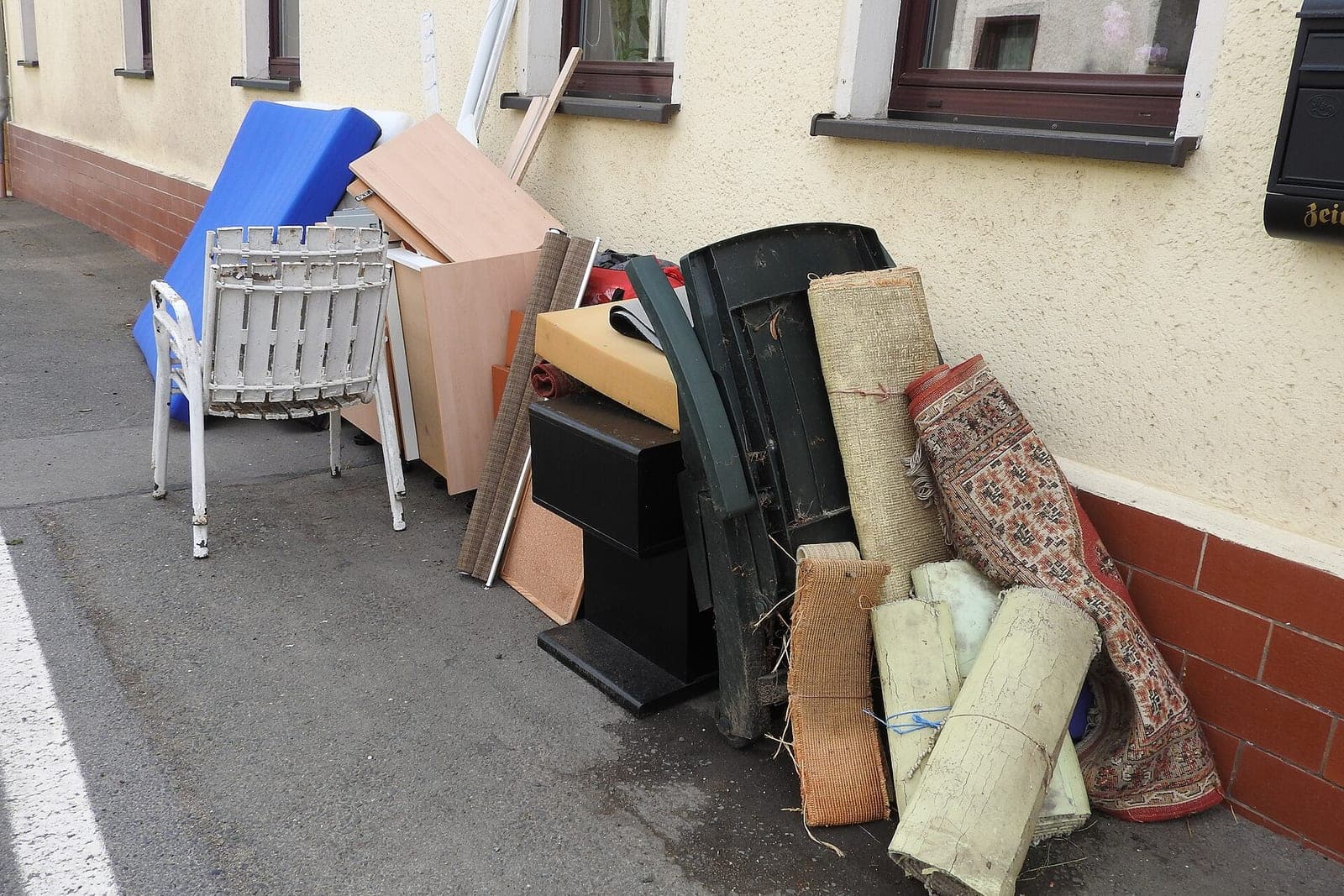
Photos are what make online booking work for junk removal. A crew lead can look at three good pictures and know roughly how much of the truck the job will fill. The booking sorts each job into the load sizes you use, from a single item to a full truck, while a person always sets the price.
The booking can sort jobs into the load sizes you use, such as a single item, a small load, a half truck or a full truck. That helps with the schedule, since a full-truck basement job takes a different slot than a single couch at the curb.
When customers ask for a junk removal quote online, the honest answer is that a person prices every job. The booking never shows a number or a range. It sends the photos and notes to you or your crew lead, and a person replies with the price. The crew sees the pile, confirms that price with the customer, and only then starts loading.
Your no-take list
Every junk removal company has items it will not haul or charges extra for. The rules vary by company and by local disposal rules, so the list has to be yours. The booking asks about those items by name and tells customers plainly when one is on the list.
The booking should:
- Ask about common problem items by name, using your list
- Tell the customer plainly when an item is on it
- Offer to note it for a person to review, when it is a gray area
- Never give advice on handling or disposing of anything dangerous
The EPA's household hazardous waste guidance (opens in a new tab) notes that leftover paints, cleaners, oils, batteries and pesticides can contain hazardous ingredients and need special care when thrown away.
If a customer describes a leaking container, a strong chemical smell or anything that sounds unsafe, the booking does not try to help. If anyone may be hurt or in danger, the only instruction it gives is to call 911, and it alerts your on-call person at once. It also flags the job for the owner.
How should a junk removal company set arrival windows?
Most companies give customers a window, not an exact time, because jobs vary so much. A junk removal schedule built on windows lets the crew finish a messy basement without making the next customer wait without warning. The booking offers only windows with room for that load size, and customers get a text if a job runs long.
A simple setup:
- You set your windows, such as morning, midday and afternoon.
- The booking only offers windows with room for that load size.
- The customer gets a confirmation text with the window.
- On the day, the crew sends a heads-up when they are on the way.
- If a job runs long, the next customer gets a text before the window passes.
Only text people who contacted you or gave you permission, and make opting out easy. Under the FCC's rules on automated texts (opens in a new tab), marketing texts need written consent, while purely informational texts can rely on consent given out loud.
Can customers book same-day pickups?
They can if your rules allow it. Same-day requests are a big part of junk removal, from move-outs to a landlord who needs a unit cleared before new tenants arrive. You set the rules, and the booking never promises a pickup the crew cannot make.
You decide how same-day works. The booking can offer same-day only when a truck has room, send the request to the owner for a yes or no, or offer the first open window tomorrow.
What the crew and the owner keep
The crew and the owner keep everything that needs judgment. The final price is always confirmed on site, and discounts, deposits and gray-area items on your no-take list go to a person. Anything that looks unsafe, damage claims and special terms for property managers stay with your team.
- The final price, always confirmed on site
- Discounts, deposits and payment questions
- Items in a gray area on your no-take list
- Anything that looks unsafe, including heavy lifts and hazardous items
- Damage claims, complaints and upset customers
- Jobs for property managers and businesses with special terms
Same team. Same jobs. More capacity. Your crew spends the day loading trucks, not answering the same five questions on the phone.
Our post on junk removal software covers the wider office side, from dispatch to invoices. And if you want booking that works across many trades, our guide to AI appointment scheduling covers the basics.
A Saturday garage clean-out
This is an illustration, not a customer story.
On a Thursday night, a homeowner fills out the booking form. She uploads four photos of a crowded garage: boxes, an old couch, a broken treadmill and a few cans of paint. The booking marks it as a half-truck load, notes the treadmill as heavy, and tells her paint cans are on the company's no-take list. She picks a Saturday morning window.
On Saturday, the crew texts that they are on the way. They look over the garage, confirm the price with her, and start loading. The paint stays behind, as she already knew it would.
Frequently asked questions
Do customers have to send photos to book?
No, but photos make the visit smoother. The booking can ask nicely and remind once. Without photos, the crew simply sizes the job on arrival.
Can the booking take a deposit?
It can send an online payment link if you require a deposit. You set the amount and the policy, and refunds always go to a person.
Will it work for commercial clean-outs?
Yes. Commercial jobs often need a walkthrough first. The booking can collect the details and schedule that visit with the owner or a crew lead.
How do you price your junk removal services?
Most companies price by how much of the truck a load fills, then adjust for heavy items, labor, stairs and dump fees. Photos at booking help you give a range, and the crew confirms the final price on site before work starts.
Next step
If your phone keeps ringing with "how much to haul this?", book a free workflow consult. We work from the Kansas City metro and meet owners face to face or on video. In the consult we look at how jobs reach you today, which questions your crew asks on every call, and how a booking flow could ask them for you.
About the ScaleAlphaAi team
We are a Kansas City company that designs and builds AI agents and custom software for small businesses, trades and growing firms. We write these guides from our work with owners and office teams: what AI handles well, what stays with your people, and how to start with one workflow.
Meet the team