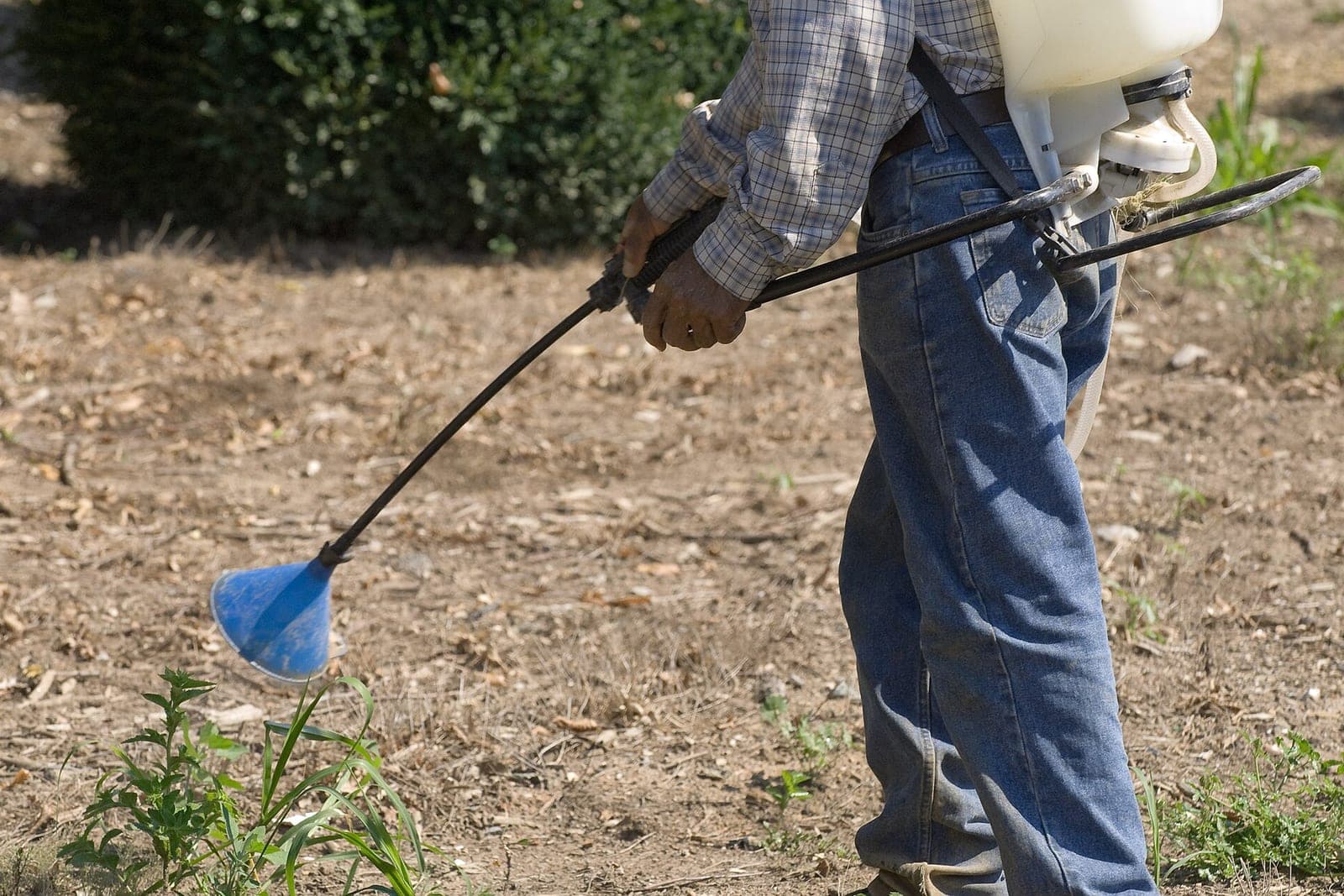
Pesticide application record keeping software is the log your crew fills in at every stop: what was applied, how much, where, when and by whom. We build it as a custom app that fits your routes and your state's forms, so each record is finished in the field.
This guide is for lawn care, pest control and ag spray owners, and for farms that spray their own fields. For the bigger picture, see our guide to AI for small business. For calls, plans and re-service visits, see AI for pest control companies.
What should pesticide application record keeping software log?
Pesticide application record keeping software should log each application as its own record, with the date, the start and end time, the site, the area treated, the target pest, the product and its EPA registration number, the amount or rate used, and the licensed person who applied it. Any later edit stays visible.
From the owner's chair, that log has three jobs. It answers the customer who asks what went on the lawn. It answers an inspector who asks for your records. And at season's end, it shows how much of each product your crews used. Wind and temperature earn a field too, for any later drift question.
Why do paper logs and route apps leave gaps?
Paper logs and general route apps leave gaps because neither was made for this record. Paper gets wet, smudged and typed in late. A route app knows the stop and the time, but it rarely asks for the product, the amount and the registration number, or shows who changed an entry.
Pest control record keeping breaks down in four places:
- No signal. A rural stop or a crawl space drops the network, and a web form loses the entry.
- Missing fields. "Treated perimeter" says nothing about the product or the amount.
- Edit history. A typo fixed next week should still show the old value and who changed it.
- The export. Columns pulled from three tools are not a record you can hand an inspector.
Cattle operations lose treatment notes the same way; see cattle record keeping software.
What does our spray record app do, screen by screen?
Our spray record app gives each tech a short form for every stop, gives the office one view of every log and turns any month into a clean export. It is one of our small-business tools, with a database, a simple login and a link to the route or billing tool you already use.
- The stop log. The tech taps today's stop. The address, customer and area size fill in, and the start time stamps itself.
- Product and amount. Products come from your own list, so the trade name and registration number ride along. The stop will not close until every field your state names is filled.
- The applicator. Each log carries the name and state credential of the person who applied it.
- The office view. The office flags gaps and fixes typos. Every edit keeps the old value, the new one and who made the change.
- The export. A month, a customer or one address comes out as a readable page or a file in your state's layout.
At day's end, the Ops Agent can draft a reminder to any tech with an open stop, and your office lead approves it first.
Unlike boxed pesticide record keeping software, ours is built around your products and forms. It sits beside the yard record in a lawn care CRM or the visit notes in pool service software. We offer this app with the right to use it or with full ownership, and the package you choose sets which.
Farm spray logs that work out in the field
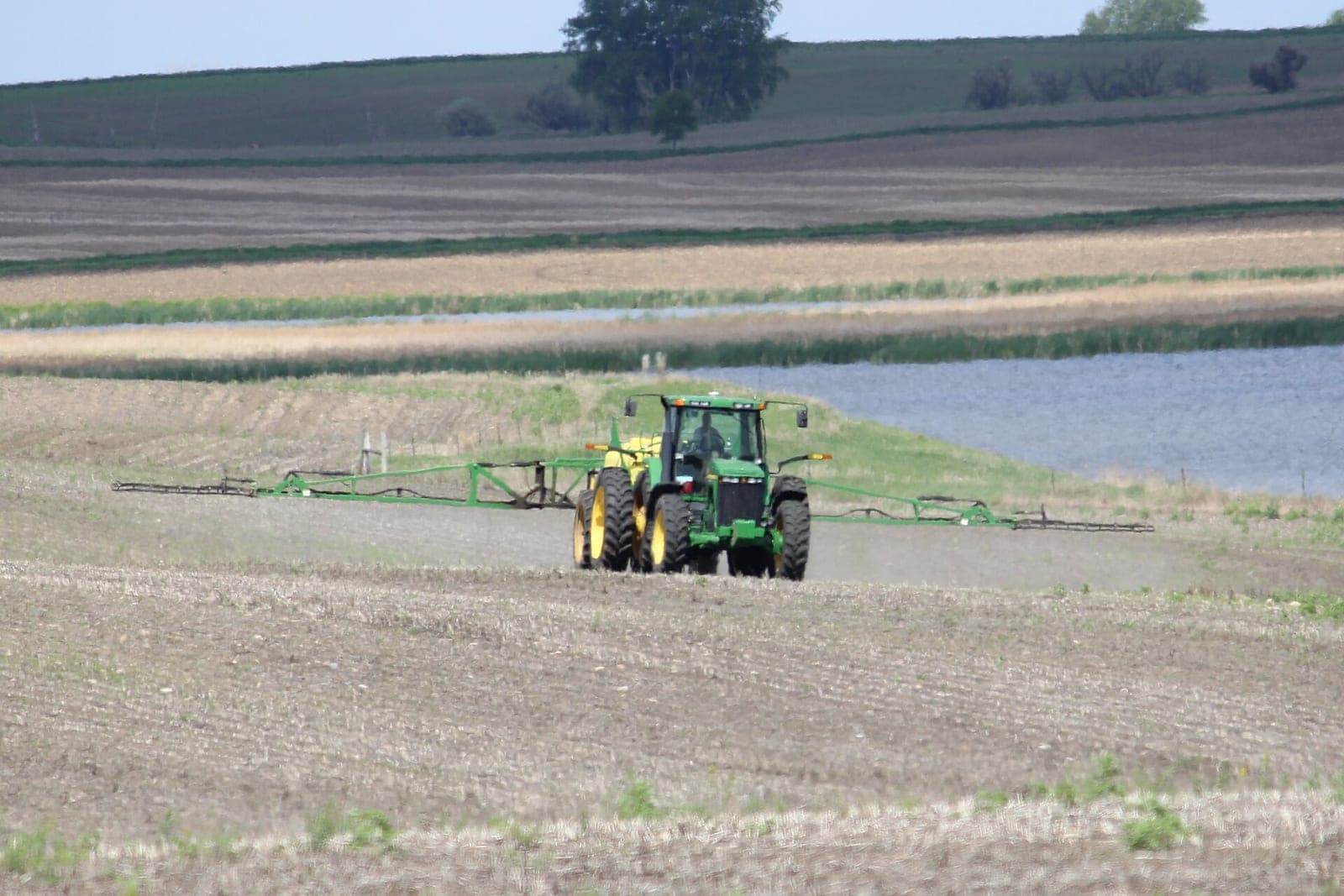
A farm spray log records each pass over a field, with the crop, the field name, the product, the rate, the weather at the time and the operator. Ours runs on a phone or tablet in the cab, saves with no signal and syncs when the truck reaches the yard.
Farms follow different rules from spray businesses. USDA rescinded its federal record rule for applicators of restricted use pesticides in 2025. The label still governs every use. A farm with workers also falls under the EPA's Worker Protection Standard, which asks the employer to share application details when a worker asks in writing. Your state's department of agriculture can say what else applies.
The farm version keeps a field list with this season's crop, your products and rates in your own units. Wind and temperature are typed in or pulled from a weather feed. One export covers a field, a crop or the season. A grower's plantings, harvests and buyer orders belong in small farm management software.
Kansas City crews work both sides of the state line
Kansas City crews often treat Kansas yards in the morning and Missouri yards after lunch, and each state sets its own record rules. The app reads the state from each stop's address and asks for the fields that state names, so a tech never carries two paper forms.
In Kansas, the state's pesticide business law (opens in a new tab) requires a business to give each customer a statement of services naming the product, the amount and area treated, the date, place and times, and who applied it, and to keep a copy. The app drafts it from the stop log and emails it only to customers who agreed. Kansas's rule on record formats (opens in a new tab) allows paper records, electronic ones or both, if the electronic copy prints readably.
In Missouri, the state's pesticide rules (opens in a new tab) list what a commercial applicator's record must show, including the target pests, the registration number and the rates used. Those rules changed at the start of 2025, so we build from the current text.
Building it with one crew, and what stays with your applicators
We write a short spec of your forms, products and rules, build the app, then run a pilot with one crew before anyone else uses it. Your licensed applicators keep every judgment call, such as which product, what rate, whether to treat today and what to tell a worried customer. The app records what they did.
The pilot crew runs these checks in the field:
- A stop logged with no signal reaches the office once the phone reconnects.
- A log missing the product, the amount or the applicator cannot close.
- A typo fixed in the office keeps the old value and who changed it.
- The month's export prints cleanly and matches the logs line for line.
- A Missouri address asks for Missouri fields, and a Kansas address drafts the Kansas statement.
We connect the app to your scheduling and invoicing tools, so stops arrive on their own and a closed log can start the bill. Same team. Same jobs. More capacity.
This is an illustration, not a customer story. A lawn and tree-care company in Raytown has four trucks and an office lead named Orla. During the pilot, a customer called to ask what went on their lawn, and Orla read the product and amount from that morning's log while the customer waited.
Frequently asked questions
How long do you have to keep pesticide records?
It depends on your state and the kind of license you hold. Kansas and Missouri each set their own retention periods, and some product labels add more. Check the current rule with your state's department of agriculture, then set the app to keep every log at least that long.
What is a restricted use pesticide?
A restricted use pesticide is a product the EPA limits to licensed applicators, or people under their direct supervision, because it needs extra care to use without harming people or the land. The label says so near the top. The app can flag these products so each log names the licensed person responsible.
What are the benefits of keeping accurate pesticide application records?
Accurate records let you answer a customer, an inspector or a neighbor with facts instead of memory. They show what went where, how much and who applied it. Over a season, they also show which stops needed a second visit.
What are pesticide record keeping requirements?
They are the fields your state says each application record must hold, and they differ by state and license type. In Missouri, commercial records include the date and times, the site and area treated, the target pests, the registration number and the rates. Kansas asks businesses for a customer statement with similar details.
How long do you have to keep spray records?
There is no single answer for farms. The federal record rule for private applicators was rescinded in 2025, so any period now comes from the label, a state rule if one applies, or a buyer who asks for records. A farm with workers must also share application details when a worker asks.
What is a spray diary?
A spray diary is a running log of every spray on a farm, orchard or vineyard, with the date, field, crop, product, rate, weather and the applicator's name. It is the farm version of an applicator's job log. Ours lives on a phone in the cab, not in a notebook on the dash.
Next step
Book a free workflow consult and bring a week of your current logs. We will look at which fields go missing, where the signal drops and what your state asks you to keep, then sketch the screens your crew would tap at each stop. We work from the Kansas City metro and meet owners face to face or by video call.
Our standards
- The examples in our guides are illustrations, not customer stories.
- Your AI runs on private and on-premise models, not public AI tools, and nothing you give us is used to train AI models.
- Agents are built so each action is logged in a record that shows any later edit.
- Every call and text opens with a short line saying it is the business's AI assistant, and asking for a person always works.
- Texts go only to people who contacted you or gave you permission, and every message says how to stop.
- If anyone may be hurt or in danger, the only instruction an agent gives is to call 911.
- Depending on the investment package you choose, you get either the right to use the software we build for you or full ownership of it.
- We work from the Kansas City metro and meet owners face to face or by video call.
- Same team. Same jobs. More capacity.
About the ScaleAlphaSi team
ScaleAlphaSi is a Kansas City firm specializing in Advanced AI Engineering. We design and build AI agents and custom software for small businesses, trades and growing companies. Each guide draws on our experience with owners and office teams: where AI delivers, where your people stay in charge, and how to begin with a single workflow.
Meet the team