An AI receptionist for septic service is built to pick up calls day and night. It sorts each one into a backup, a routine pumping or an inspection request, and acts on your rules for each one. Backups reach your on-call driver fast. Pumping requests get booked from the tank records you keep, and inspection requests land on the office desk with the closing date attached.
This post is for septic owners who run trucks, not desks. It walks through the three kinds of calls you get, what the receptionist asks on each, and where a person always takes over. If you are still comparing options, our guide on how to choose an AI receptionist covers the buying side. Our AI receptionist for small business guide explains the basics that apply to every trade.
Which septic calls are urgent and which can be scheduled?
Urgency is your call, not the software's. You write the rule once, and the receptionist sorts every caller by it, day or night. Most companies sort calls into backups, routine pumping and real-estate inspections, and the receptionist never decides on its own that a backup can wait.
Most septic companies sort calls into three piles:
- Backups into the house. Sewage coming up a floor drain or a tub. Many owners treat this as urgent and want the on-call driver alerted right away.
- Routine pumping. The tank is due, or the homeowner just bought the place and has no idea when it was last pumped.
- Real-estate inspections. An agent or a buyer needs the system looked at before a closing date.
Some owners add a fourth pile for slow drains and gurgling pipes. Those can often wait for the next open slot, but only if your rule says so. The receptionist never decides on its own that a backup can wait.
What an AI receptionist for septic service asks on a backup call
On a backup call, the AI receptionist asks where the sewage is coming up, whether it is still rising, the address and access, gate and dog notes, and where the lid is. The questions stay short because the caller is stressed, and the summary goes straight to your on-call driver.
- Where is it coming up? Basement drain, lowest toilet, tub, or outside near the tank.
- Is it still rising? And is anyone using water in the house right now.
- The address and how to get there. Rural roads, long lanes and unmarked drives matter more in septic than almost any trade.
- Gate and dog notes. A locked farm gate or a loose dog can stop a truck cold.
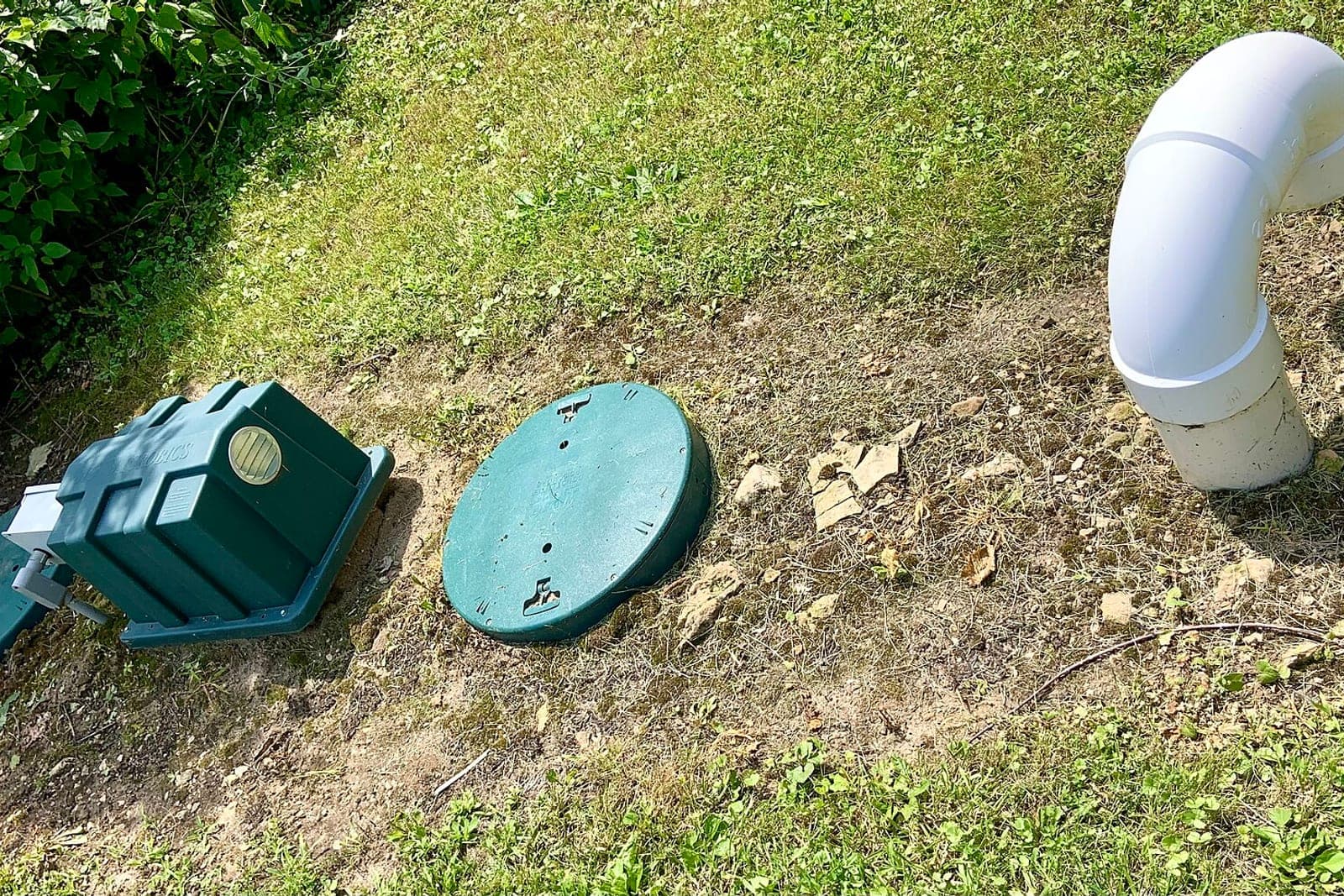
- Do you know where the lid is? Many homeowners do not. That is fine. The answer goes in the driver's notes.
Then it texts the on-call driver the summary and tells the caller when to expect a call back, using the window you set.
There is one hard line. If the caller mentions a strong sewage smell with someone feeling sick, anyone hurt, or anything that sounds dangerous, the only instruction it gives is to call 911, and it alerts your on-call person at once. It never gives health advice, cleanup advice or treatment advice. Those questions go to a person.
How does it book a local septic tank pumping schedule?
It books from the tank records you already keep. When a known customer calls, it pulls the tank size, the last pumping date and the lid location, then offers the next open slot that fits your route days. New callers are asked what they know about their tank.
For a new caller, it asks what they know. Tank size if they have it. When it was last pumped. Whether the lid is buried. Whether there is a riser. If they do not know, it says so in the notes, and your office decides how much time to block.
This is also where your route days pay off. If you run certain roads on certain days, you can tell the receptionist. A caller out on the north side gets offered your north-side days first. That keeps the truck from crossing the county for one stop.
Reminders work the same way. When a customer comes due by the interval you set, they get a friendly text with a booking link. Only text people who contacted you or gave you permission, and make opting out easy, in line with the FCC's rules on automated texts (opens in a new tab). The EPA's septic care guidance (opens in a new tab) calls for regular inspections and pumping on a set schedule.
Real-estate inspections and closing deadlines
Inspection calls come from agents, buyers, sellers and sometimes lenders. They are not urgent the way a backup is, but they have a hard date behind them. Miss it and you lose the agent for good. The receptionist collects the closing date and report contact, and a person confirms the slot.
The receptionist collects:
- The agent's name and how to reach them
- The property address and any access notes
- The closing date and the date the report is needed
- Who is paying and who gets the report
- Whether the house is empty or lived in
All of it goes to the office as one tidy request. A person confirms the slot, the scope and the price. The receptionist never promises a report date on its own.
What about septic quotes over the phone?
It answers only from what you have approved. If you publish a standard pumping price, it can share that. If you do not, it takes the details and tells the caller someone will follow up. Drain fields, repairs and installs always go to the owner to price.
Callers often ask for prices on things the receptionist should never price: a new drain field, a tank that needs repair, an install for a new build. Those get the caller's details, photos if they have them, and a note for the owner. You price the work. You decide which jobs come first when the schedule is tight.
What stays with a person
Prices not on your approved list, the order of competing backup calls, health and safety questions, and repairs, permits and county paperwork all stay with a person. Plenty of the work on a septic phone line is judgment, so each of these goes over with the full call summary attached.
- Every price that is not already on your approved list
- Priority calls when two backups come in on the same night
- Anything about health, safety, cleanup or what is safe to flush
- Repair and install questions, permits and county paperwork
- Upset callers, complaints and billing disputes
- Promises about arrival times beyond the window you set
Same team. Same jobs. More capacity. The receptionist takes the repeat questions so your office and drivers can handle the rest.
A Saturday on the septic line
This is an illustration, not a customer story.
A two-truck septic company runs a small office that closes at noon on Saturday. At four that afternoon, a homeowner calls. Water is coming up the basement floor drain. The receptionist greets her with a short line saying an AI assistant is answering. It asks where the water is, whether it is still rising, and the address. She says the house is at the end of a gravel lane, the gate is chained but not locked, and there is a friendly dog. She does not know where the lid is.
The owner's rule says basement backups page the on-call driver. The driver gets a text with all of it right away. The caller hears that the driver will call back within the window the owner set.
A little later, a buyer's agent calls about an inspection. The closing is later this month. The receptionist takes the address, the dates and the agent's details. On Monday morning, the office finds it at the top of the inbox and books it.
How we set it up for a septic company
We can set up the Customer Agent, our AI receptionist, to answer your septic line after hours, sort backups from pumping calls, book pumping from your tank records, and text your on-call driver the address, gate notes and lid location, so the truck rolls ready.
It is one of the six agents in our Starter Upgrades, so you can start with phones and add more later. Our guide to AI for small business shows what "more" can look like.
Every call and text opens with a short line saying it is the business's AI assistant, and asking for a person always works. Calls are recorded and transcribed so our team can follow up. Federal law on recording calls (opens in a new tab) generally allows recording when one party to the call consents. Every call is logged, so you can read what was said and tune the script. Your customer records stay yours. Our post on after-hours answering goes deeper on night and weekend coverage, and septic software covers the records behind it.
Frequently asked questions
Can it tell a caller whether their tank is full?
No. It never diagnoses a system over the phone. It asks what the caller is seeing, writes it down, and books the visit or alerts your driver by your rule.
What if the caller has no idea where the tank is?
That is common, especially with new owners. The receptionist notes it and asks if they have a property sketch or old paperwork. Your driver can plan extra time to probe for the lid.
Will it work with the scheduling tool we already use?
In most cases, yes. Where your tool can connect, the receptionist books straight into it. Where it cannot, it sends your office a ready-to-enter request.
Can it handle calls from real-estate agents during busy season?
Yes. It collects the closing date, address and report contact on every inspection call, so none of them sit in voicemail. A person still confirms each one.
Next step
If you run a septic company and your phone rings while you are under a lid, book a free workflow consult. We work out of the Kansas City metro and can meet at your yard or by video. We would look at how backup calls reach your on-call driver, how you track tank records, and where inspection requests slip through.
About the ScaleAlphaAi team
We are a Kansas City company that designs and builds AI agents and custom software for small businesses, trades and growing firms. We write these guides from our work with owners and office teams: what AI handles well, what stays with your people, and how to start with one workflow.
Meet the team