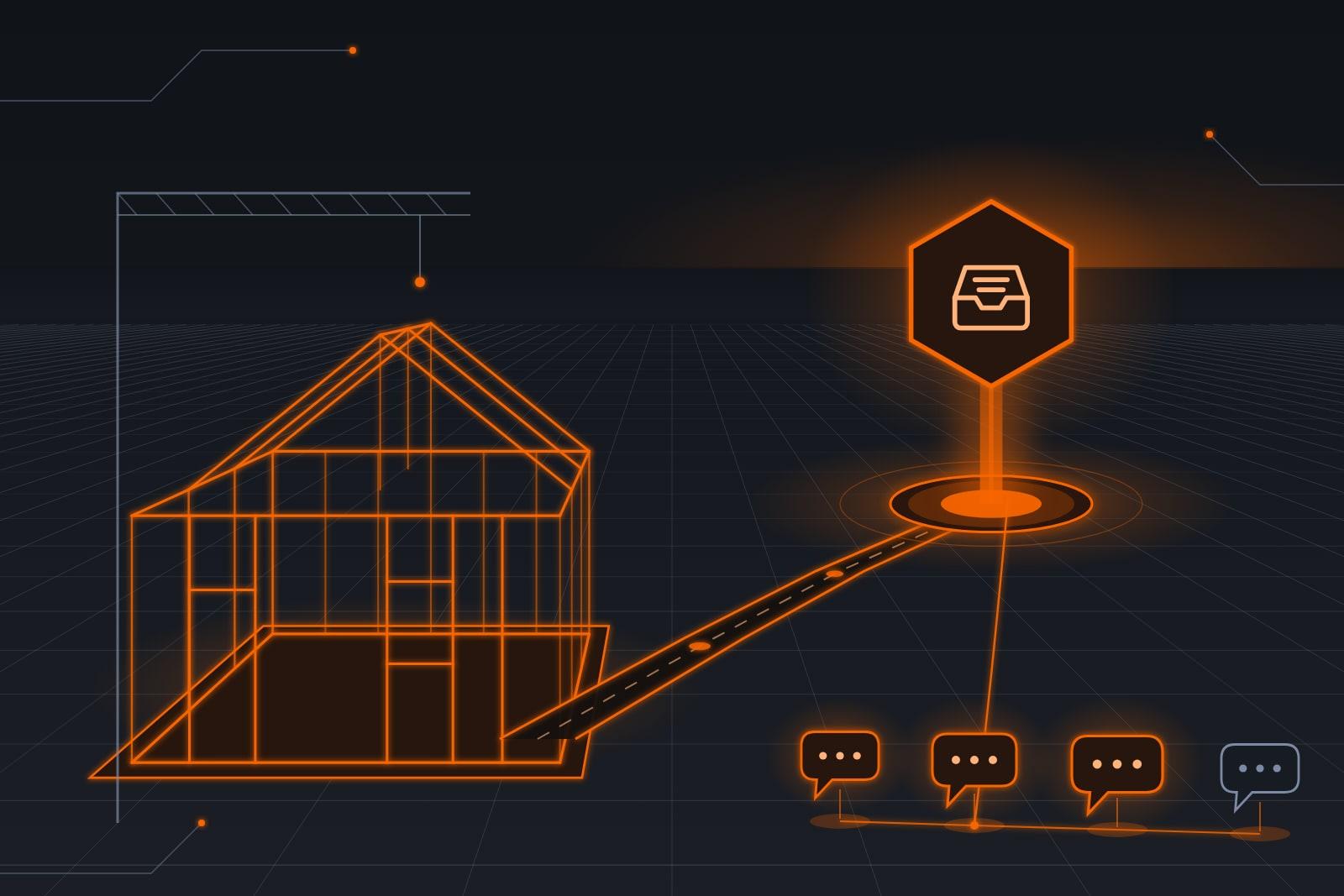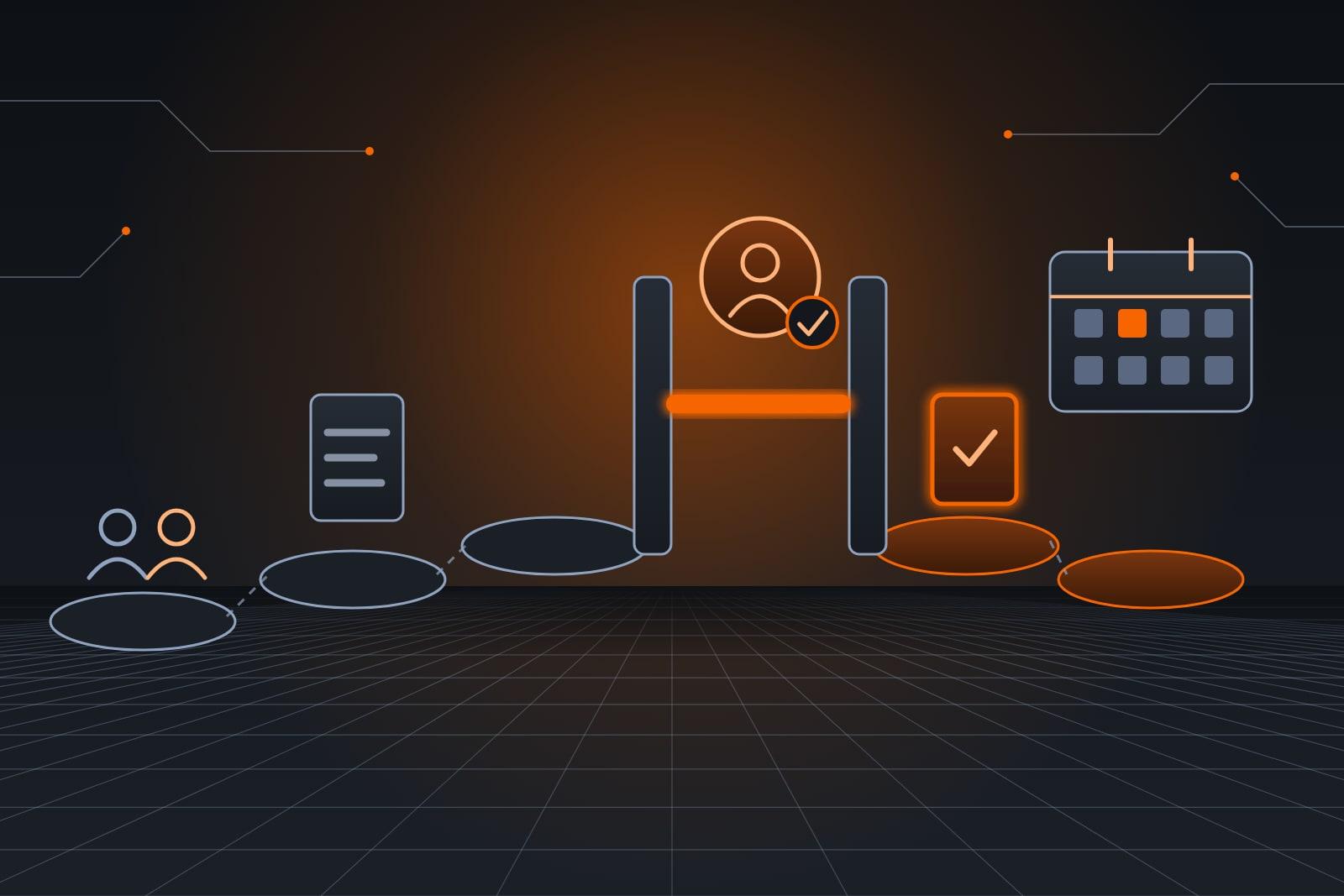
Human-in-the-loop AI in Lenexa means a named staff member approves an agent's work before it reaches anyone outside. A first project runs in four stages: a meeting, a written plan, a tested build and a trial on one workflow.
Human in the loop means a person approves an AI's output as a fixed step. For a small office or nonprofit, the first agent is often the Admin Agent, which sorts the inbox and drafts replies.
Our AI Agents page lists what each agent handles. The principle itself is covered in human-in-the-loop AI for nonprofits, while the stages below show each step of an engagement with us.
What does human-in-the-loop AI in Lenexa look like?
It looks like a short engagement with a sign-off at every stage, so your team sees and approves each step before the next one starts. Small offices and nonprofits in Johnson County get the same four stages. The table shows what happens in each one and who decides.
| Stage | What happens | Who signs off |
|---|---|---|
| First meeting | We follow one workflow from start to finish | Your owner or director picks it |
| Written plan | The task, its limits and its approver go on paper | Your owner or director approves it |
| Build and test | The agent runs on your past examples | The approver checks the samples |
| Trial | The agent works live, free for 30 days | The approver reads every output |
Nothing moves to the next stage until the person in the right column says yes.
Where does the first meeting happen?
The first meeting happens wherever it suits your team: at your office, at a table in your building or on a video call. In person, we watch one task move from the inbox to the finished reply. On video, you share the screens and documents that task depends on.
Getting to you is easy. Lenexa's city overview (opens in a new tab) lists Interstate 35, Interstate 435 and K-10 among the routes that serve the city.
Bring the person who does the task today. Their shortcuts, exceptions and personal habits shape the plan more than any software list.
What goes into the written plan?
The written plan is a short document that names one workflow, the records the agent may read and the cases it must hand to a person. It also names the approver and how your team will judge the trial. You approve the plan before any build begins, and the work stays inside it.
- The task: one workflow, such as document requests or meeting scheduling.
- The limits: the folders, inboxes and fields the agent may touch, and nothing else.
- The hand-offs: complaints, money questions and anything unusual go to a named person.
- The approver: one staff member, with a backup for vacation weeks.
- The measure: how many drafts the approver had to fix, and why.
Who signs off before anything goes out?
The approver signs off on every output during the trial, and nothing leaves your organization without that review. Earlier, your owner or director signs off on the plan and the templates. Later, the approver decides whether routine items can move to a lighter check.
A Census Bureau working paper on business AI adoption (opens in a new tab) found 66% of AI users rely on it only to augment tasks.

Privacy gets its own line in the plan. Keep client records, donor records and case notes out of prompts. The approver reviews each draft before it is sent, and the agent logs every release.
The NIST AI Risk Management Framework (opens in a new tab), a voluntary federal guide, is a useful reference when a board asks how that oversight is set up.
How does the free trial run?
The trial runs on the one workflow from your plan, with live work and full review, for the agent's first month. The approver reads, edits and releases each output. We review those edits with you at the end and change any wording or rule that kept needing a fix.
At the end you choose one of three paths: keep the agent on a care plan, widen it to a second task, or stop. Stopping costs nothing, and your records stay in your own tools.
What ScaleAlphaSi puts in writing
Every stage at ScaleAlphaSi is written down, and every output has an owner. The free consult comes first, then a workflow review, a written plan and a phased build. We stay after launch to tune the agent, and a newer AI model replaces the old one only after it does better on your past work.
- Sessions that fit: talk with us at your desk or over video, and the How We Work page shows every stage.
- One task at a time: each new workflow gets its own plan, approver and trial.
- Plain answers: we tell you directly when a task is not ready for an agent, even at the first meeting.
For the fundraising side of this work, see AI agents for nonprofits in Lenexa. If you are comparing partners, read how to choose an AI agency in Lenexa.
Book a free consult meeting to pick your first workflow.
A small office's first month
Example: a bookkeeping office's document requests
Picture a small bookkeeping office that spends every Monday chasing clients for missing statements. The plan names one task: the Admin Agent drafts each request from the client list, and the office manager approves it.
Early on she edits the tone on several drafts and adds a rule for clients who prefer phone calls. By the end of the trial most requests pass as written, and the owner keeps the agent on.
Frequently asked questions
What should we bring to the first meeting?
Bring a handful of recent examples of the task, both ordinary ones and the awkward cases, and a list of the tools it touches.
Those examples become the test set for the build stage, so the agent is judged on your real work.
Who should approve the agent's work on a small team?
The approver should be the person who does the task today, since they know what a good result looks like. Name a backup for days off. The owner or director approves the plan itself.
What happens when the free trial ends?
When the trial ends, we review the approver's edits with you and you decide. You can keep the agent on a care plan, add a second workflow or stop with nothing owed.
Does the agent ever send without approval?
During the trial, the agent never sends anything without the approver's release. Afterward, your team may let routine items such as reminders go out in reviewed batches. Anything new or unusual still waits for a person.
Next step
Book a free consult meeting and pick the format: face to face at your Lenexa office or on a video call. Together we write down one workflow and its approver, and that agent is then free for 30 days.
Our standards
- The examples in our guides are illustrations, not customer stories.
- Your AI runs on private and on-premise models, not public AI tools. Nothing you give us is used to train AI models.
- Agents are built so each action is logged in a record that shows any later edit.
- Texts go only to people who gave you permission, and every message says how to stop.
- If anyone may be hurt or in danger, the only instruction an agent gives is to call 911.
- Depending on the investment package you choose, you get either the right to use the software we build for you or full ownership of it.
- We work from the Kansas City metro and meet owners face to face or by video call.
- Same team. Same jobs. More capacity.
About the ScaleAlphaSi team
ScaleAlphaSi is a Kansas City AI advisory firm specializing in Advanced Marketing and AI Engineering. Our team drives demand through SEO, AEO, GEO and paid ads management. Once that demand arrives, we build specialized AI agents to scale operations for profitability. Each guide draws on engagements with owners and operations teams, covering where to start, where people stay in charge and how to scale one workflow at a time.
Meet the Team