AI agents for nonprofit fundraising handle the preparation behind each donor conversation. They pull giving history into a brief and draft thank-you notes from approved facts. Staff still decide who to meet and what to say.
A CRM, often read as constituent relationship management in nonprofit offices, is the shared record of every donor, gift and contact. Our AI agents for nonprofits page shows how this work fits beside grants, programs and volunteers.
Where do AI agents for nonprofit fundraising fit?
Fundraising agents fit in the hours before and after a donor conversation. Before a visit, the Sales Agent reads the CRM and builds a brief. Afterward, the Admin Agent drafts the thank-you and logs the touch, so a development officer spends less of the week pulling records.
The agents pull records, draft notes and set reminders. A staff member makes every decision and signs every note.
If you are still choosing where gifts and pledges should live, start with our guide to donation tracking software for nonprofits.
What goes into a prospect research brief?
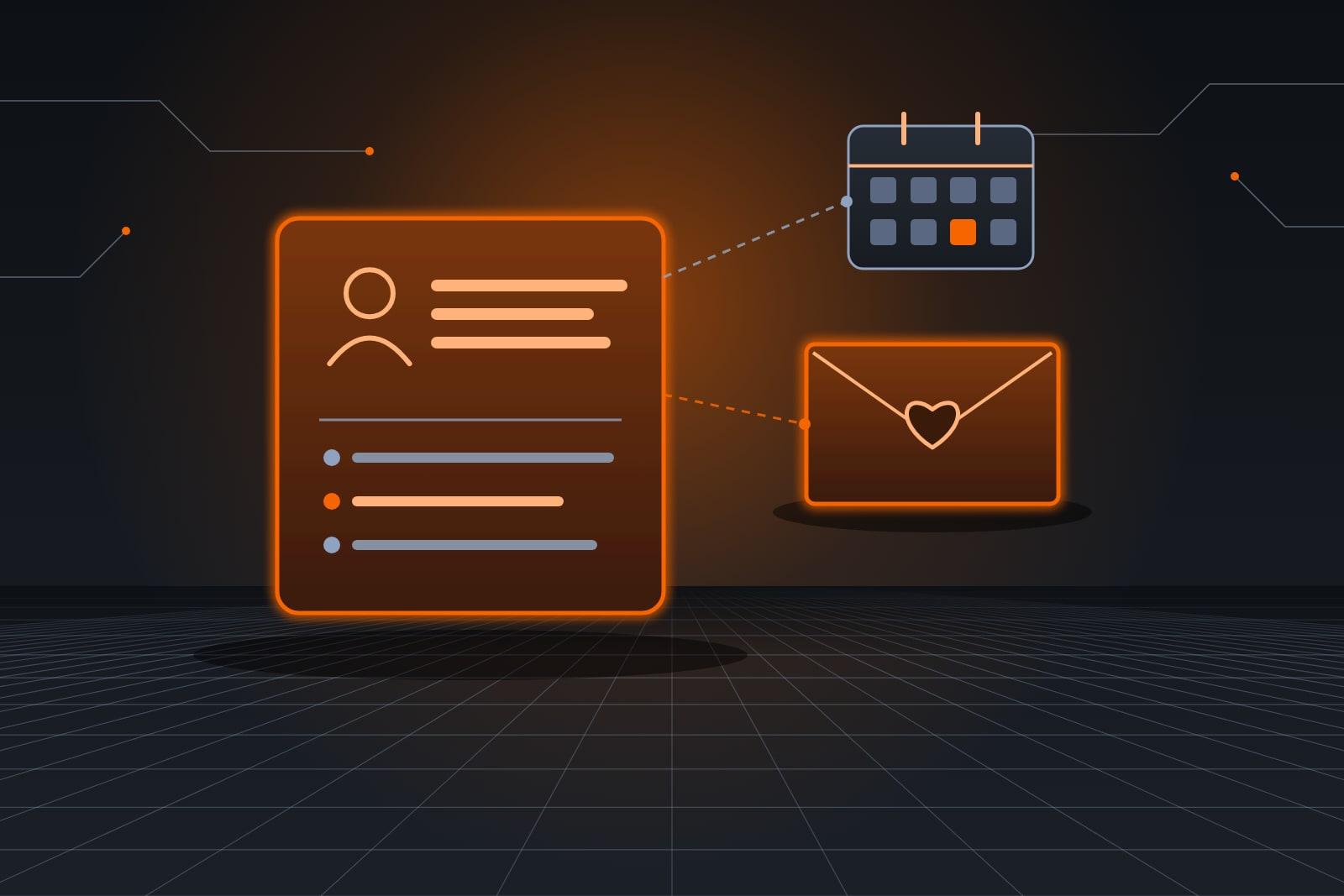
A prospect research brief is a one-page summary of what your organization already knows about a supporter. The Sales Agent builds it only from your own records, such as past gifts, event attendance and notes from earlier conversations. Staff read it before deciding whether a meeting makes sense.
- Giving history. First gift, most recent gift and the programs that person chose to fund.
- Engagement. Events attended, volunteer shifts and replies to past appeals.
- Open threads. Promised follow-ups, unanswered questions and pledge reminders.
- Gaps. Anything missing or stale, flagged for staff instead of guessed.
The brief never scores a person's wealth or digs through outside sites. That kind of research, where your organization does it at all, stays a staff task with its own rules.
How are thank-you notes drafted?
Each thank-you is drafted from a short list of approved facts: the gift, the program it supports and one line of impact your program team already signed off on. The Admin Agent fills a template your staff wrote, in your voice. A person reads every note and sends it.
A note that arrives within days of a gift feels personal, while one that arrives weeks later reads like a form letter.
Receipts follow their own rules. The IRS page on written acknowledgments (opens in a new tab) lists what one must state, including your organization's name and whether anything was given in return. The Admin Agent drafts that wording from your template.
Finance staff check each receipt, and your accountant answers any tax question.
Keeping current supporters close between gifts is a separate job, covered in our guide to AI for nonprofit donor management.
Which fundraising decisions stay with people?
Every decision that shapes a relationship stays with development staff. The agent can suggest who looks ready for a conversation, but staff choose whom to visit, what to ask for and how to answer a hard question. Anything a supporter might read as a promise also waits for a person.

| Task | Agent | Development staff |
|---|---|---|
| Build a meeting brief | Drafts it from the CRM | Reads it and decides |
| Choose who to meet | Suggests from activity | Makes the call |
| Set an ask amount | Never | Yes |
| Draft a thank-you | From approved facts | Edits and sends |
| Answer a major gift question | Passes it on | Yes |
What should a fundraising agent never see?
Donor privacy starts with what the agent is allowed to see. A prompt is the instruction an agent works from. Keep constituent details such as home addresses, health notes and private family news out of prompts, and give the agent only the fields a brief or a thank-you needs.
Each agent gets read access to those fields and nothing more. A staff member reviews every brief and every note before it leaves the organization.
Our guide to AI for nonprofits best practices lists the other limits to set before you start.
How ScaleAlphaSi sets up fundraising
ScaleAlphaSi connects the Sales Agent to the CRM, inbox and calendar your development team already uses. It starts on one job, such as meeting briefs, with staff approving each one. The agent takes on more only after your team trusts its work.
The setup follows the same pattern as the rest of our nonprofit AI work, with a person approving each brief and note.
If your team also seeks foundation funding, see how the same approach drafts proposals in grant writing AI for nonprofits.
Book a free consult meeting to map where your donor records live today.
A lapsed supporter, start to finish
Example: a supporter who stopped giving
A supporter gave every spring for years, then missed one. The Sales Agent spots the gap and builds a brief: past gifts, the after-school program she funded and her old question about volunteering.
The development director reads the brief and decides a call fits better than a letter. The Sales Agent drafts talking points from approved updates. After the call, it logs her promised follow-up as a reminder.
An Indiana University study of household giving (opens in a new tab) found the share of U.S. households giving to secular causes dropped from 52% in 2010 to 42% in 2018. With fewer households giving, a lapsed supporter is worth a personal call.
Frequently asked questions
Can an AI agent find new donors for us?
An agent can surface supporters in your own CRM who look ready for a closer conversation, based on their activity with you. It does not buy lists or scrape outside sites. Your staff decide whom to approach and how.
How soon should a thank-you go out after a gift?
A thank-you should go out within days of a gift, while it is still fresh for the donor. The Admin Agent drafts the note once the gift is logged, so the only wait is a staff member's read.
Does a fundraising agent replace a development officer?
A fundraising agent replaces none of the relationship work. It takes the record pulling, drafting and logging off a development officer's desk, so more of the week goes to supporters. Every ask, promise and hard conversation stays with that officer.
What does a meeting brief need from our CRM?
A good brief needs clean gift records, event attendance and contact notes. Gaps are fine, because the agent flags them rather than filling them in. Many teams tidy their most active records first, then widen the brief as data improves.
Next step
Book a free consult meeting and bring a list of the fundraising tasks that fall behind most often. We will map them against your CRM, then you can try a fundraising agent free for 30 days on that one task. The Kansas City nonprofit guide shows how donors, volunteers and grants fit together.
Our standards
- The examples in our guides are illustrations, not customer stories.
- Your AI runs on private and on-premise models, not public AI tools. Nothing you give us is used to train AI models.
- Agents are built so each action is logged in a record that shows any later edit.
- Texts go only to people who gave you permission, and every message says how to stop.
- If anyone may be hurt or in danger, the only instruction an agent gives is to call 911.
- Depending on the investment package you choose, you get either the right to use the software we build for you or full ownership of it.
- We work from the Kansas City metro and meet owners face to face or by video call.
- Same team. Same jobs. More capacity.
About the ScaleAlphaSi team
ScaleAlphaSi is a Kansas City AI advisory firm specializing in Advanced Marketing and AI Engineering. Our team drives demand through SEO, AEO, GEO and paid ads management. Once that demand arrives, we build specialized AI agents to scale operations for profitability. Each guide draws on engagements with owners and operations teams, covering where to start, where people stay in charge and how to scale one workflow at a time.
Meet the Team