AI for roofing companies helps most in the office and on the paperwork, not on the roof. It answers and books the flood of calls and texts after a storm, follows up on estimates the same day, builds job packets, drafts estimates from photos, keeps claim paperwork in order and gets the invoice out when the job closes. Your crews, your inspections and your pricing stay human.
This post walks through the roofing year, the six places AI earns its keep, what should stay with your people, and how to start before the next storm season.
The roofing season AI can lighten
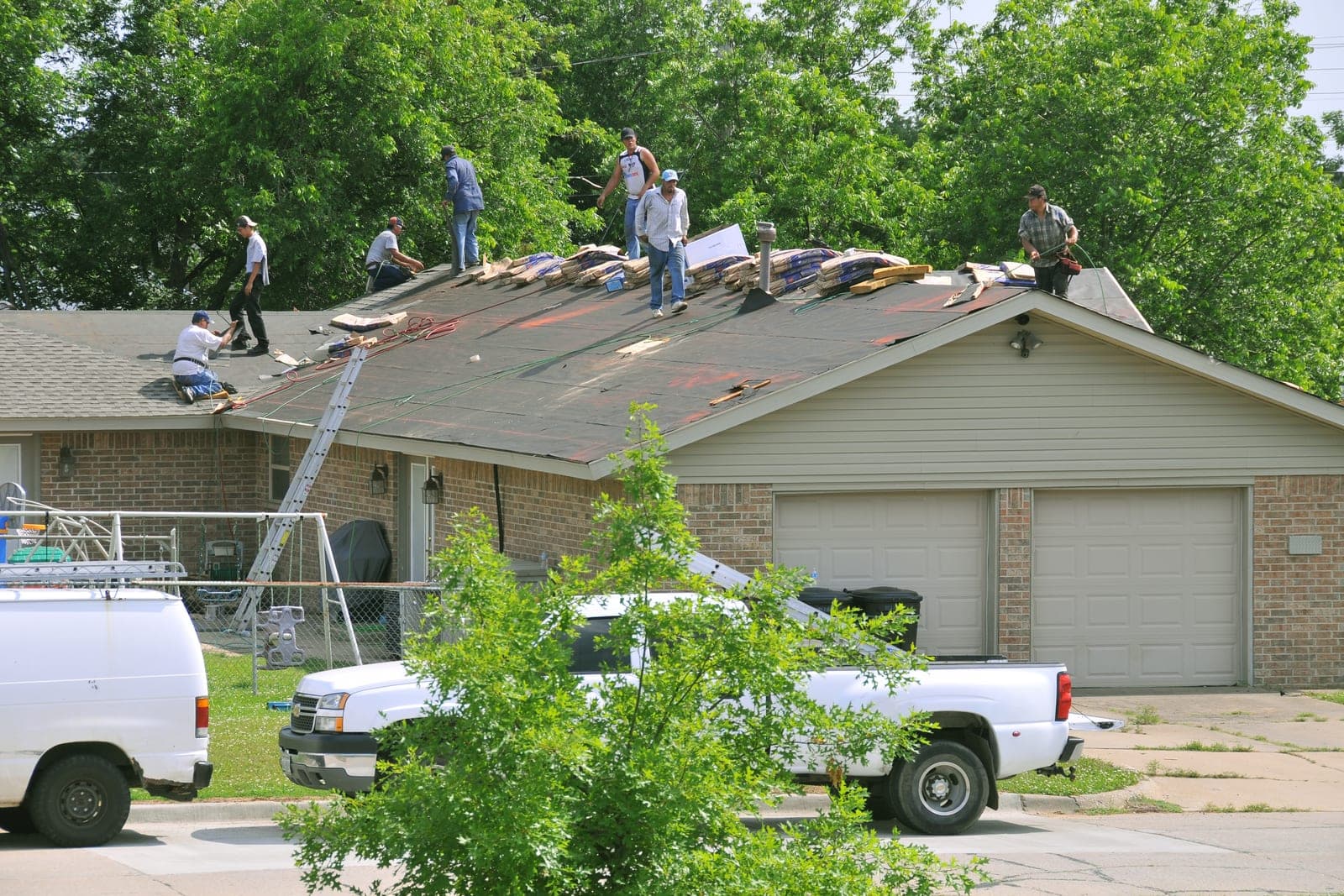
Every roofing owner knows the shape of it. A hailstorm rolls through on a Tuesday night. By Wednesday morning the phone, the texts and the website form are all going at once. Homeowners want an inspection today. The office is booking, the sales reps are on roofs, and the crews are already committed for weeks.
Calls roll to voicemail. Inspections happen, but the estimates sit in a rep's truck for days. Homeowners who got an estimate never hear back. Claim jobs pile up with adjuster papers in one inbox and photos on three different phones. The roof goes on, and the invoice waits until someone has a free afternoon.
None of that is a skill problem. Your team knows roofs. It is a capacity problem, and it is made of repeat work.
Six places AI earns its keep in a roofing office
AI earns its keep in a roofing office in six places, from storm-season calls and same-day estimate follow-up to job packets, estimates from photos, claims paperwork and invoices drafted at job close. Each is repeat office work, and a person reviews every estimate, supplement and invoice before it goes out.
1. Storm-season calls and texts. An agent handles the overflow and after-hours inquiries, asks the right questions (address, what they see, any leaks inside, whether they have filed a claim), offers the first open inspection window, and books it on your real calendar. Active leaks trigger an alert to your on-call person by a rule you set. See the Customer Agent.
2. Estimate follow-up the same day. The estimate that went out Monday gets a plain follow-up Monday afternoon, and another later in the week if there is no answer. Your rep still owns the price, the scope and the close. See the Sales Agent.
3. Job packets before the crew rolls. The address, the approved scope, the materials and colors the homeowner picked, the photos from inspection, gate codes and notes about the dog, gathered into one packet before the crew leaves the yard. The Ops Agent builds it; your crew lead checks it.
4. Estimates from photos. A Tier 5 build on our Solutions page: the homeowner or your inspector uploads photos of the roof, and AI drafts a scoped estimate from your own price book. Your estimator reviews it, fixes what is off, and approves it. Nothing goes to a homeowner without that approval.
5. Claims paperwork in one place. Claim intake, adjuster documents, supplements and payment tracking, per claim. AI can set the adjuster's scope beside your estimate so your estimator sees the differences at a glance, and it can draft a supplement from the items your estimator flags. A person reviews and sends everything.
6. The invoice drafted when the job is marked complete. Not next week. When the crew lead closes out the job, the draft invoice is ready for a person to review and send, and polite reminders go out on schedule for anything still open, including the final check on a claim job. A person approves every invoice before it goes out, as the SBA's guidance on AI (opens in a new tab) suggests for anything AI writes.
What stays with your crews and your people
Inspections, every price, anything said to an insurer about coverage and safety on the roof always stay with your crews and your people. A roofing company runs on judgment, so contracts, warranty promises and upset homeowners go to a named person too, with the context already gathered.
- Inspections, and the call on whether damage is from a storm
- Repair-versus-new-roof recommendations and every price
- Anything said to an insurer or adjuster about coverage
- Safety on the roof, crew assignments and the schedule your crews can actually hold
- Warranty promises and anything involving damage to the property
- Contracts, signatures, and angry or legal customer threads
The agent's job in those moments is to gather what it can, stop, and hand the thread to a named person with the context attached. Same team. Same jobs. More capacity.
How to start with AI for roofing companies before storm season
Start before storm season by picking the one leak that hurt most last season, whether that was unanswered storm-week calls, inspections with no estimate, estimates with no second touch, stalled claim jobs or slow invoices. Measure it as a baseline, run one agent on it for a month and compare.
- Storm-week calls and texts that went to voicemail or sat unanswered
- Inspections that never turned into a sent estimate
- Estimates that never got a second touch
- Claim jobs where a supplement or a final check went quiet
- Days between job-complete and invoice-sent
Pull your own numbers for that one leak from last season. That is your baseline. Then run one agent or one tool on it for a month, keep a person at the gate, and compare. If it earns its keep, add the next one. Our guide to AI for small business covers where else agents help once the first one runs well.
If you also run other trades, or know owners who do, the same pattern shows up in our posts on AI for HVAC companies, AI for plumbing companies and AI for landscaping companies.
AI receptionist for roofers after a storm
After a storm, an AI receptionist for roofers is built to pick up homeowner calls day and night, including several at once, and books inspections on your calendar. It also gives your approved company details to people checking whether your crew is legitimate.
Storm-week calls tend to fall into four groups.
- "Can someone look at my roof?" It books an inspection. It also asks what the caller can see from the ground, like missing shingles or dented gutters.
- "Will my insurance pay for this?" It never answers coverage questions. It notes whether a claim has been filed, and a person from your team goes over the claim with them.
- "Water is coming through my ceiling." Active leaks are flagged to your on-call person right away, with the address and what is happening inside. If anyone may be hurt or in danger, the only instruction it gives is to call 911, and it alerts your on-call person at once.
- "Are you a real company?" Plenty of homeowners get a knock on the door after hail. The receptionist shares your office address, the license details you provide and the name of the rep booked to visit. The FTC's advice on home repair scams (opens in a new tab) tells homeowners to check licenses and insurance and get written estimates after a storm. In Kansas, the state's roofing registration law (opens in a new tab) bars anyone from working as a roofer without a valid registration certificate.
Contract questions, prices and frustrated homeowners go to the owner or office manager. That person reads a summary before calling back. Whether the damage came from the storm stays your inspector's call.
We can set up the Customer Agent, our AI receptionist, to keep up with your roofing calls through storm week, book inspections, flag leaks to on-call and reassure wary homeowners with facts you signed off on. Every call and text opens with a short line saying it is the business's AI assistant, and asking for a person always works.
More guides for roofers
- CRM for Roofing Contractors: Inspection to Final Walk-Through: inspection to final walk-through.
- Roofing Invoices: Deposits, Insurance Checks and Final Bills: deposits, insurance checks and final bills.
- Roofing Reviews: Ask After the Final Walk-Through, Not Before: ask after the final walk-through.
- Roofing Maintenance Programs for Commercial Clients, Run on Time: commercial maintenance visits run on time.
- Gutter Estimates: Linear Feet, Downspouts and Guards: linear feet, downspouts and guards.
- Gutter Cleaning Plans: Spring and Fall Reminders, Routes, Invoices: spring and fall reminders, routes and invoices.
Frequently asked questions
Will AI work with the roofing software we already use?
The agents are fitted to the tools you already use rather than sold as a separate platform. Where a tool can connect, the agent reads and writes there. Where it cannot, a person handles that step and the agent prepares everything around it.
Can AI measure a roof or write an estimate on its own?
AI can draft an estimate from photos and your price book, but it does not approve one. Your estimator checks the scope, the measurements and every price before anything goes to a homeowner.
What happens when a homeowner calls with an active leak?
You set the rule. A typical setup has the agent collect the address and what is happening inside, then text your on-call person right away with the details already gathered. The agent never decides what is safe.
Is AI only for big storm restoration companies?
No. A small roofing company misses the same storm-week calls a large one does, usually more of them, because the owner is also on the roof. The first workflow is sized to the shop.
How do you use AI to generate roofing leads?
Use it to win more of the leads you already get. An agent answers every storm-week call and web form, books the inspection and follows up on open estimates, so fewer homeowners drift to the next roofer. It does not make up demand, and nobody can promise you a lead count.
Next step
We work with roofing companies across the Kansas City metro and beyond. If you want to know where AI would pay off before the next storm, book a free workflow consult. We map how work moves through your shop, show you where time and revenue leak, and give you a plain-English plan. No hard sell. No lock-in.
About the ScaleAlphaAi team
We are a Kansas City company that designs and builds AI agents and custom software for small businesses, trades and growing firms. We write these guides from our work with owners and office teams: what AI handles well, what stays with your people, and how to start with one workflow.
Meet the team