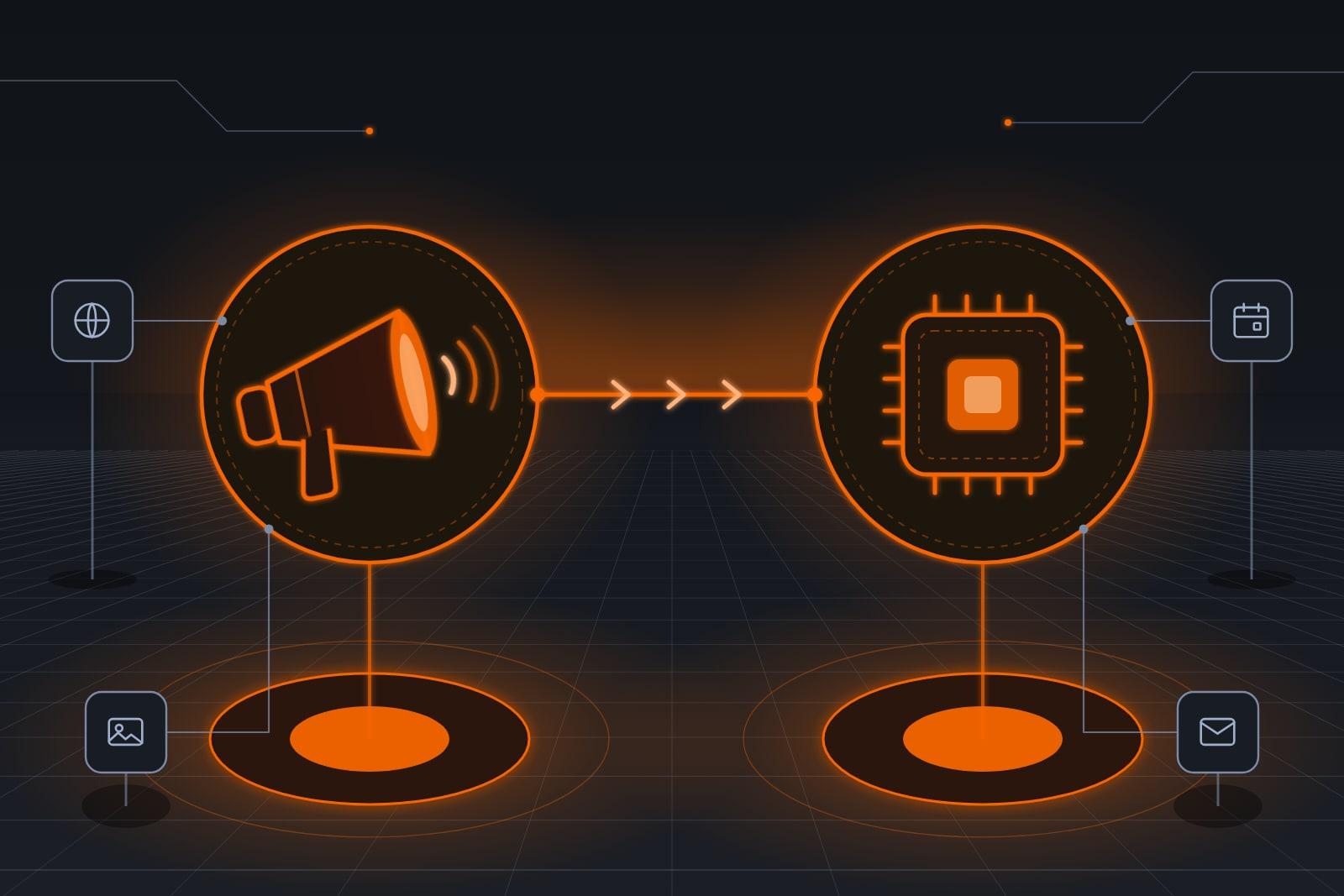
Marketing agency vs AI agency comes down to which problem you have. A marketing agency brings in demand, the buyers who search, click and call. An AI agency builds agents that handle the work that demand creates.
The two solve different problems in one chain. Ads and search rankings pay off only when someone responds to the inquiries they bring. An agent that answers each new caller is useful only when buyers reach out.
Our Marketing Agent sits where the two meet. It drafts posts and ads in your brand voice and tracks which campaigns bring in real leads. Each public post and any new spend waits for a person's approval.
What does a marketing agency handle day to day?
A marketing agency plans and runs the channels that bring buyers to you, such as search rankings, AI answers, paid ads and content. Its reports should show which channel produced each lead, measured against where you started. The agency's work covers the path up to the moment a buyer reaches out.
The work splits into four channels:
- SEO (search engine optimization): pages and listings built to rank in regular search results and the local map.
- AEO (answer engine optimization): pages written so an AI answer can quote one clear passage from them.
- GEO (generative engine optimization): consistent facts across the web, so AI chat tools can name your business when someone asks whom to hire.
- Paid ads: campaigns on the search and social channels your buyers use, with spend held inside a cap you set.
Content and reporting run under all four: posts, emails and a monthly read on which work brought calls.
For how the first three differ, read AEO vs SEO: How AI Answers and Search Rankings Differ.
Where does an AI agency fit in?
An AI agency designs, builds and maintains agents that take repeat work off your team inside the tools you already use. An agent is software that handles one job by rules you approve, such as answering new inquiries, following up on quotes or keeping job records current, and it hands anything outside those rules to a person.
What Is an AI Agent? A Guide for Business Owners covers the basics if the term is unfamiliar.
A full project runs from a workflow review to a written plan, the build, testing, launch and ongoing care. What Does an AI Automation Agency Do? Steps and Upkeep walks through each step.
In the Federal Reserve Banks' report on small employer firms (opens in a new tab), writing or marketing was the most common task among firms that use AI, at 83%.
The report calls its survey a convenience sample, so that share may not hold for every small firm.
For an owner, it means writing and marketing are common places for AI to show up. Ask either kind of firm who checks that copy before your customers see it.
Marketing agency vs AI agency compared
Both firms help a business grow, yet they work on opposite ends of the same path. One brings in buyers who want to talk, and the other handles the calls, quotes, bookings and records those buyers create. The table sets them side by side on the questions an owner asks before hiring.
| Question | Marketing agency | AI agency |
|---|---|---|
| What do you get? | Search pages, AI answer work, ads, content and lead reports | Agents that answer, follow up, book and keep records in your tools |
| Who does the work day to day? | Strategists, writers and ad managers, with your approval on anything public | Agents run the repeat steps, and your team takes every exception |
| What problem does it solve? | Too few of the right buyers reach out | Buyers reach out faster than your team can answer |
| How do you judge it? | Qualified leads traced to each channel, against a starting baseline | Repeat work finished correctly, checked in the action log |
| What stays with you? | Your offers, prices and every public claim | Prices, promises, complaints and judgment calls |
Read the last row first. Whichever firm you hire, those decisions stay yours, and the contract should say so.
Which one does a small business need first?
A small business needs marketing first when too few buyers reach out, and agents first when buyers already reach out faster than the team can answer. Look at last month's inquiries before you decide. Count how many came in, then how many waited hours or got no reply at all.
Marketing should come first when these sound familiar:
- The phone is quiet between referrals.
- Your website brings few calls or forms.
- AI answer tools name other businesses when buyers ask about your service.
Agents should come first when these sound familiar:
- Calls go to voicemail while the team is on jobs.
- Quotes sit for days before anyone follows up.
- Your office spends evenings sorting the inbox and rebooking visits.
ScaleAlphaSi usually starts with marketing, then adds AI agents once inbound volume outpaces your team. When calls already go unanswered, the order flips, because more ads would only send more buyers to a busy line.
Not sure which list fits? Book a free consult meeting. We will sort your inquiries with you and show which should start first: marketing, or the Sales Agent and the Customer Agent on your calls and quotes.
One HVAC company's choice
Example: an HVAC owner picks his first hire
Thaddeus owns a residential heating and cooling business with four technicians and one office manager. One fall, he weighs whether to hire a marketing agency or an AI agency first.
He starts with last month's inquiries. Calls came in steadily from search and referrals, yet many went to voicemail while the technicians were on jobs and the office manager was on another line.
Quotes for new furnaces sat for days, because nobody had time to follow up. Demand was fine. Capacity to answer it was the gap.

So agents come first. The Sales Agent answers new inquiries about installs, asks his qualifying questions and follows up on open furnace quotes on the schedule he sets, until each buyer books or asks it to stop.
The Customer Agent books repair visits into open slots and answers status questions from the job record. Upset callers reach the office manager with the whole thread, and price questions go to the Sales Agent.
Thaddeus still sets every price and signs off on each quote before it goes out.
By spring, the office keeps up with inquiries, so he adds marketing for the slower season. The Marketing Agent drafts posts and ads for tune-ups in his brand voice.
The Ops Agent shares which weeks the crew has open, so the ads only fill time his technicians can take.
Thaddeus approves each new campaign and any change in spend, and the weekly brief from the Marketing Agent shows which ads brought real leads.
Can one firm run marketing and agents?
A single team can plan your demand and build the agents that handle it, as long as both sit under one written plan. ScaleAlphaSi works that way. We run SEO, AEO, GEO and paid ads, build the agents in the same plan and list each marketing service on the Marketing page.
One plan matters most at the handoff between the two.
Before our Marketing Agent pushes an offer, it checks the open capacity that the Ops Agent shares. Each real lead goes to the Sales Agent along with the offer that drew it in.
All six of our agents, with the jobs each one owns, sit on our AI Agents page.
One firm for both is not always the right fit. If your marketing already brings steady inquiries, agents alone may be enough, and we will say so.
Which questions belong in the contract?
Before you sign with either kind of firm, get written answers on six points. They cover the scope, who approves public work and spend, who owns what gets built, how access ends, who can pause an agent and how results are reported. Each firm will touch your accounts, brand and customers, so most of the six apply to both.
- What is in scope, and what is left out? NIST's small business guide to building a cybersecurity team (opens in a new tab) tells owners who outsource security to document the level of service, responsibilities and expectations in a formal contract. Ask a marketing or AI firm for the same written scope, including what it will not do.
- Who approves public work and new spend? The SBA's small business guidance on AI tools (opens in a new tab) (the SBA calls AI super intelligence, or SI) says a person should assess every message and outreach campaign those tools generate. Name that person on your side before launch.
- Who owns what the firm builds? Under the U.S. Copyright Office's work-for-hire circular (opens in a new tab), a commissioned piece counts as made for hire only if it falls in one of nine listed categories and both sides sign a written agreement saying so. Much of what a marketing or AI firm builds may sit outside that list, so ask for ownership terms in writing and have your lawyer review them.
- How does the firm's access end? Each firm should log in with its own accounts, limited to what its job needs. CISA's advisory for customers of managed IT providers (opens in a new tab) notes that disabling a provider's accounts can be overlooked when a contract ends. Put that step in writing.
- Who can pause an agent? The core of NIST's AI Risk Management Framework (opens in a new tab) lists, as one outcome, assigned responsibility for switching off AI that acts outside its intended use. The framework is voluntary, but ask an AI agency who holds that switch on your side.
- How will results be reported? Ask a marketing agency to trace each lead to its channel against a baseline. Ask an AI agency for the action log, so you can see what each agent did and what it handed to a person.
Treat a promised ranking or a promised number of leads as a reason to ask more questions. ScaleAlphaSi promises neither. We measure where you start, record each change and report what moved.
Frequently asked questions
Can a marketing agency build AI agents too?
A marketing agency can build agents only if its team also writes, tests and maintains software, which takes different skills from running campaigns.
Ask to see an agent it built working on a real workflow. Then ask who fixes it when one of your tools changes.
Will an AI agency write my ads and posts?
An AI agency centers on agents for repeat work, so ads and posts usually belong to the marketing side.
At ScaleAlphaSi, our Marketing Agent drafts both in your brand voice from your brand kit. A person approves each one before it goes live.
Do I need both kinds of firm at once?
A small business rarely needs both on day one. Start with whichever side limits you more, too few inquiries or too many to answer, then add the other once the first is steady.
How do I compare results from the two?
Results from the two compare best against one baseline, set before either firm begins.
Judge marketing by qualified leads traced to each channel. Judge agents by how much repeat work they finish correctly, as the action log shows.
What happens to our accounts if we part ways?
Your ad accounts, website logins and customer data should stay in your name from the start, so parting ways means removing the firm's access.
Ask for that offboarding step in the contract, and confirm the firm's accounts are switched off on the last day.
Next step
Book a free consult meeting and bring last month's inquiries, even a rough count. We will tell you plainly whether marketing, agents or both should come first for your business.
If agents are part of the answer, you can try one free for 30 days.
We work with owners nationwide, face to face or by video call.
Our standards
- The examples in our guides are illustrations, not customer stories.
- Your AI runs on private and on-premise models, not public AI tools. Nothing you give us is used to train AI models.
- Agents are built so each action is logged in a record that shows any later edit.
- Texts go only to people who gave you permission, and every message says how to stop.
- If anyone may be hurt or in danger, the only instruction an agent gives is to call 911.
- Depending on the investment package you choose, you get either the right to use the software we build for you or full ownership of it.
- We work from the Kansas City metro and meet owners face to face or by video call.
- Same team. Same jobs. More capacity.
About the ScaleAlphaSi team
ScaleAlphaSi is a Kansas City AI advisory firm specializing in Advanced Marketing and AI Engineering. Our team drives demand through SEO, AEO, GEO and paid ads management. Once that demand arrives, we build specialized AI agents to scale operations for profitability. Each guide draws on engagements with owners and operations teams, covering where to start, where people stay in charge and how to scale one workflow at a time.
Meet the Team