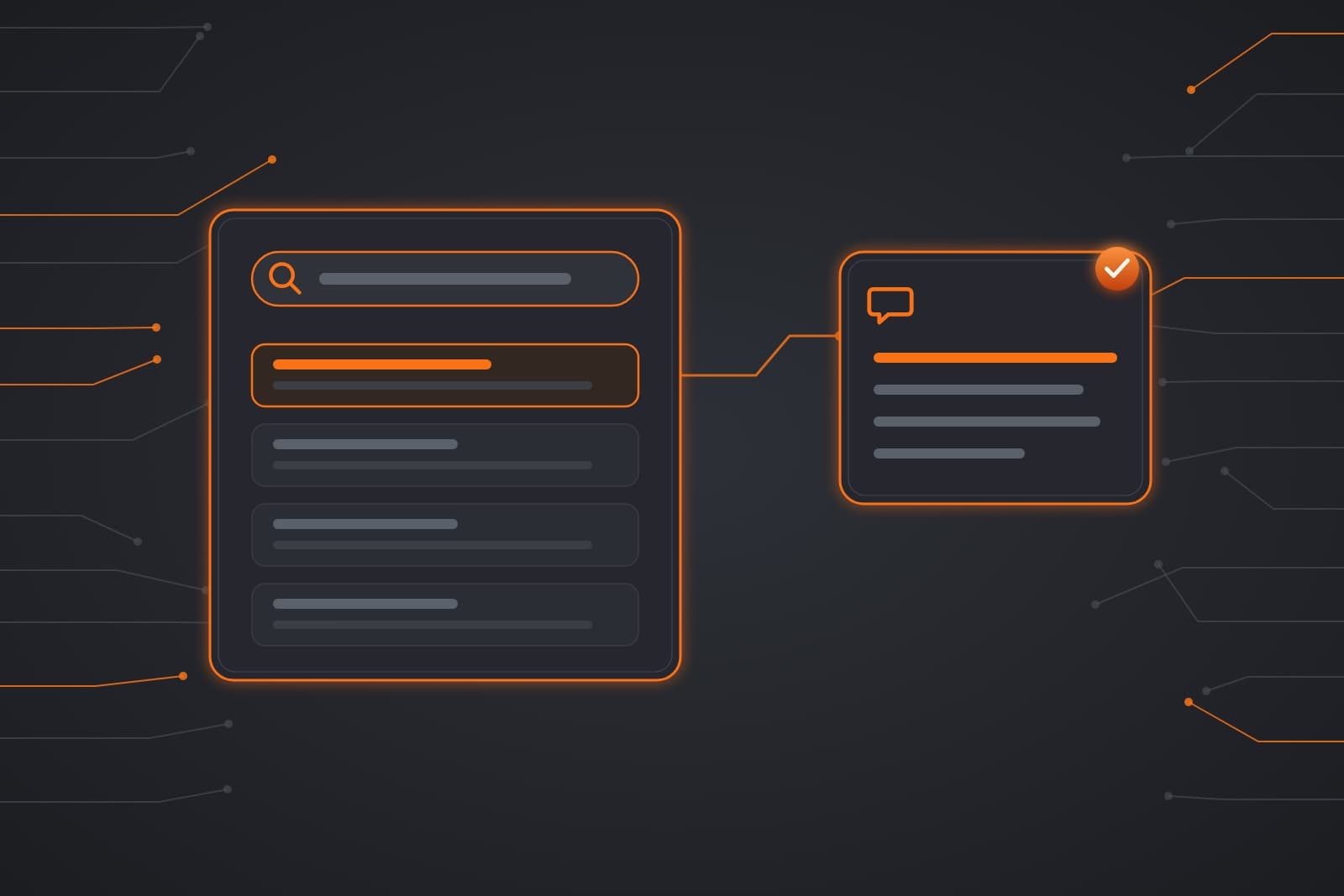
AEO vs SEO is a question of placement: SEO, or search engine optimization, aims to rank your pages in search results. AEO, or answer engine optimization, aims to get your words quoted by AI tools. A small business needs both.
A third term, GEO, or generative engine optimization, covers the longer replies AI chat tools write when someone asks which business to hire. All three reward the same thing: clear, accurate pages built around customer questions.
Our Marketing Agent checks a website for search basics, links and clear contact points, then shapes pages to show up in AI answers. Nothing new goes live until you approve it.
What does AEO mean for a business site?
AEO is the practice of writing each page so an answer engine can lift one passage and show it as the reply. An answer engine is any tool that responds with an answer instead of a list, such as an AI summary above search results or a voice assistant. The passage has to make sense on its own.
Answer engine optimization (AEO) changes how a page is built more than what it says. Four habits do most of the work:
- Question headings: every section opens under a question a customer would type or say.
- Answer first: the opening sentences under each heading reply to it in plain words.
- One topic per page: a page about one service gives a cleaner passage than a page that lists everything.
- Facts in text: your service area, hours and specialties appear as words on the page, where software can read them.
A voice assistant reads one short reply aloud. The passage that holds up when read alone is the one it can use.
Where does GEO fit beside AEO?
GEO is the effort to have your business named, and your pages cited, when an AI tool writes a longer answer drawn from several sources. AEO aims at the one passage that becomes the reply. GEO aims at the recommendation inside a fuller answer, such as a short list of firms to call.
The term comes from academic research on how content earns a place in AI-written answers.
The Princeton-led paper that introduced GEO (opens in a new tab) reports that its methods can raise visibility in AI-written answers by up to 40% on a research benchmark. In practice, page edits can change how often AI tools draw on your content.
The paper also found that what worked varied by subject area. A change that helps a law firm's pages may do little for a bakery's, so test each edit against your own customers' questions.
The authors also note that content creators have little to no control over when and how AI answer tools show their work. So page work can make a citation more likely, but no edit can secure one.
GEO work centers on facts an AI tool can check against other sources:
- Consistent facts: the same business name, range of services and coverage area on your site and every listing.
- Clear claims: specific statements about what you do and for whom, which a summary can repeat without guessing.
- Named sources: a credible reference behind each factual claim, and figures only where that reference backs them.
AEO vs SEO vs GEO: how do they compare?
SEO, AEO and GEO rest on the same clear, accurate pages. They differ in where your business shows up and in what earns the spot. SEO earns a spot in the list of links, AEO earns the quoted reply, and GEO earns a mention inside a longer AI answer.
| Approach | What you win | How you earn it |
|---|---|---|
| SEO | A high spot in the list of links and the local map | Useful pages, clean code and links from trusted websites |
| AEO | The passage quoted in AI summaries and spoken replies | A direct answer under a heading that matches the query |
| GEO | A mention in AI chat answers built from several sources | Consistent facts and evidence across your site and listings |
The three differ on paper, but the work behind them overlaps. One well-built service page can hold a ranking, supply the quoted passage and give AI chat tools facts to repeat.
Track SEO by rankings, visits and leads. AEO and GEO are harder to count, since an AI answer can name you without sending a visit, so add the mention checks a later section shows.
For a local walk-through of the same split, read AI SEO for Small Business: How to Show Up in AI Search. It puts the fixes in order for a Kansas City owner.
To see how paid ads join the three, read Digital Marketing Agency Kansas City: SEO, AEO, GEO and Ads.
Does a small business still need SEO?
SEO remains the base layer for a small business, because AI tools build many of their answers from the same web pages that search engines find and rank. A page that search engines cannot reach or read gives AI tools little to quote. Regular results also still bring buyers who never open an AI tool.
In Pew Research Center's study of AI overviews (opens in a new tab), only 8% of one- or two-word searches came with an AI summary, compared with 53% of searches of 10 words or more.
For a small business, short searches such as a trade and a town still lean on the regular results, which is SEO ground. Long questions in full sentences are where AEO matters most.
Pew Research Center's survey on chatbot use (opens in a new tab) found that 34% of U.S. adults had used one popular AI chatbot, while 66% had not. Your pages have to reach both groups of buyers.

Search engines and AI tools share one basic need: they must be able to crawl a page, meaning fetch and read it. Words locked in images or pages slowed by heavy code are hard for both to use.
What should a small site fix first?
The first fix is the top of each service page: open it with two or three plain sentences that say what you do, for whom and where. That passage can serve as the preview text in search results, the quoted AI reply and the fact an AI chat tool repeats. Most other fixes build on it.
After that, work down this list in order:
- Question headings. Turn each section heading into a question a customer asks, in their own words.
- One service per page. Give each main service its own page, so each passage stays on one topic.
- A real FAQ. Collect the questions your phone and inbox get most, and reply to each in a few sentences.
- Matching facts. Keep your business name, service area and hours identical on your site and every listing.
- Structured data. Have a developer add structured data, code that labels your business, services and FAQ so machines can read them.
- Readable pages. Keep key text out of images, and make sure each page loads fast on a phone.
Structured data helps machines read a page, but it cannot rescue a vague one. Write the page well first, then add the code.
If that list is more than your week allows, book a free consult meeting. We will look at your top pages with you and show which fixes the Marketing Agent can draft for your approval.
How can you tell if AI tools mention you?
A monthly spot check is the plainest way to learn whether AI tools name your business. Ask several AI tools the questions your customers ask, then save each answer with its date. Over a few months, the saved answers show whether you appear, which page gets cited and which competitors appear instead.
- Write the questions. List what buyers ask before they hire you, in their words, with your town where it matters.
- Ask each tool. Put every question to the AI tools your customers use, including the AI summary in regular search.
- Record the reply. Note whether your business is named, which page is cited and what the reply says about you.
- Fix the source. When a reply states an old fact or skips you, find the page it should draw on and correct it there.
- Repeat on a schedule. Run the same questions each month, so any change shows against your first record.
Your website analytics can add a second signal. Many analytics dashboards list visits from AI chat sites as referrals, though some of those visits arrive with no source attached.
Example: Philippa's monthly answer check
Philippa runs a small landscaping company and keeps a list of the questions her customers ask most, such as when to seed a lawn and which shrubs handle shade.
On the first Monday of each month, she asks three AI tools those questions and saves the replies in one document. One reply names her company. Another cites a different firm's page on shade shrubs.
Her own page on shade shrubs is a long list with no clear answer at the top. She adds a plain opening reply and a short FAQ, then asks the same questions the next month.
The saved replies give her a before and after for each page she edits.
Where does ScaleAlphaSi come in?
ScaleAlphaSi runs SEO, AEO and GEO as one plan, with paid ads where they fit, and every service is laid out on the Marketing page. We start from a baseline of how search engines and AI tools show your business before any work begins. Then we fix the pages and listings that hold you back.
The Marketing Agent keeps the work moving between our scheduled check-ins. It checks your pages for search basics, drafts content in your brand voice and sends a short weekly brief on what worked.
Nobody can promise a ranking or a citation, and we do not. What we can show you is the baseline, the changes we made and what moved after them.
Frequently asked questions
Is GEO a different job from AEO?
GEO and AEO overlap heavily, and the same page work serves both. AEO targets the single passage lifted as a reply, while GEO also depends on consistent facts about your business across the web.
Should I build separate pages just for AI tools?
Separate pages written only for AI tools are rarely worth the effort. AI tools read what your customers read, so one clear page per service works for search engines, answer engines and people at once.
How often should I check what AI tools say about me?
A monthly check works well for a small business, since AI answers shift as the tools change and as new pages appear. Ask the same questions each time, and check again after you rewrite a key page.
Will AEO bring more visits to my website?
AEO can bring more visits, though a buyer may read your quoted passage and never click. Some open your page from the answer, and others call straight from it.
Track calls, form leads and the queries where your passage appears, along with visits.
Can a small business handle AEO without an agency?
A small business can do most AEO work in house, such as rewriting page openings and building a FAQ. Structured data and page speed usually need a developer, and outside help is most useful for tracking and monthly checks.
Next step
Book a free consult meeting and bring the questions your customers ask most. We will check what search engines and AI tools say about your business, then show which page fixes come first.
When an agent is part of the plan, you can try any agent free for 30 days.
Our standards
- The examples in our guides are illustrations, not customer stories.
- Your AI runs on private and on-premise models, not public AI tools. Nothing you give us is used to train AI models.
- Agents are built so each action is logged in a record that shows any later edit.
- Texts go only to people who gave you permission, and every message says how to stop.
- If anyone may be hurt or in danger, the only instruction an agent gives is to call 911.
- Depending on the investment package you choose, you get either the right to use the software we build for you or full ownership of it.
- We work from the Kansas City metro and meet owners face to face or by video call.
- Same team. Same jobs. More capacity.
About the ScaleAlphaSi team
ScaleAlphaSi is a Kansas City AI advisory firm specializing in Advanced Marketing and AI Engineering. Our team drives demand through SEO, AEO, GEO and paid ads management. Once that demand arrives, we build specialized AI agents to scale operations for profitability. Each guide draws on engagements with owners and operations teams, covering where to start, where people stay in charge and how to scale one workflow at a time.
Meet the Team