NIST AI RMF for small business means written rules for your AI and a record showing they are followed. Our evidence pack is software that maps your agents' activity to the framework, then builds a report for reviewers.
ScaleAlphaSi makes AI security software. This product, the Evidence & Compliance Pack Generator, is listed on our Security page. You subscribe to it and run it alongside the AI agents and tools you already use, whoever built them.
Watching agent activity day to day is the job of a separate product, covered in Audit Trail for AI Agents: See Every Action and Risk. The evidence report is for the person outside your business who asks.
What framework does the evidence pack map to?
The product maps to the AI Risk Management Framework, or AI RMF, guidance from the National Institute of Standards and Technology (NIST) on handling what can go wrong with AI. NIST's page for the framework (opens in a new tab) says it is intended for voluntary use. Each business decides how much of it to apply.
NIST released the framework on January 26, 2023, after draft versions, public comments and workshops, as NIST's framework page (opens in a new tab) records. The same page says the framework is being revised, so we update our mapping when NIST publishes the revision.
Which four functions does the report follow?
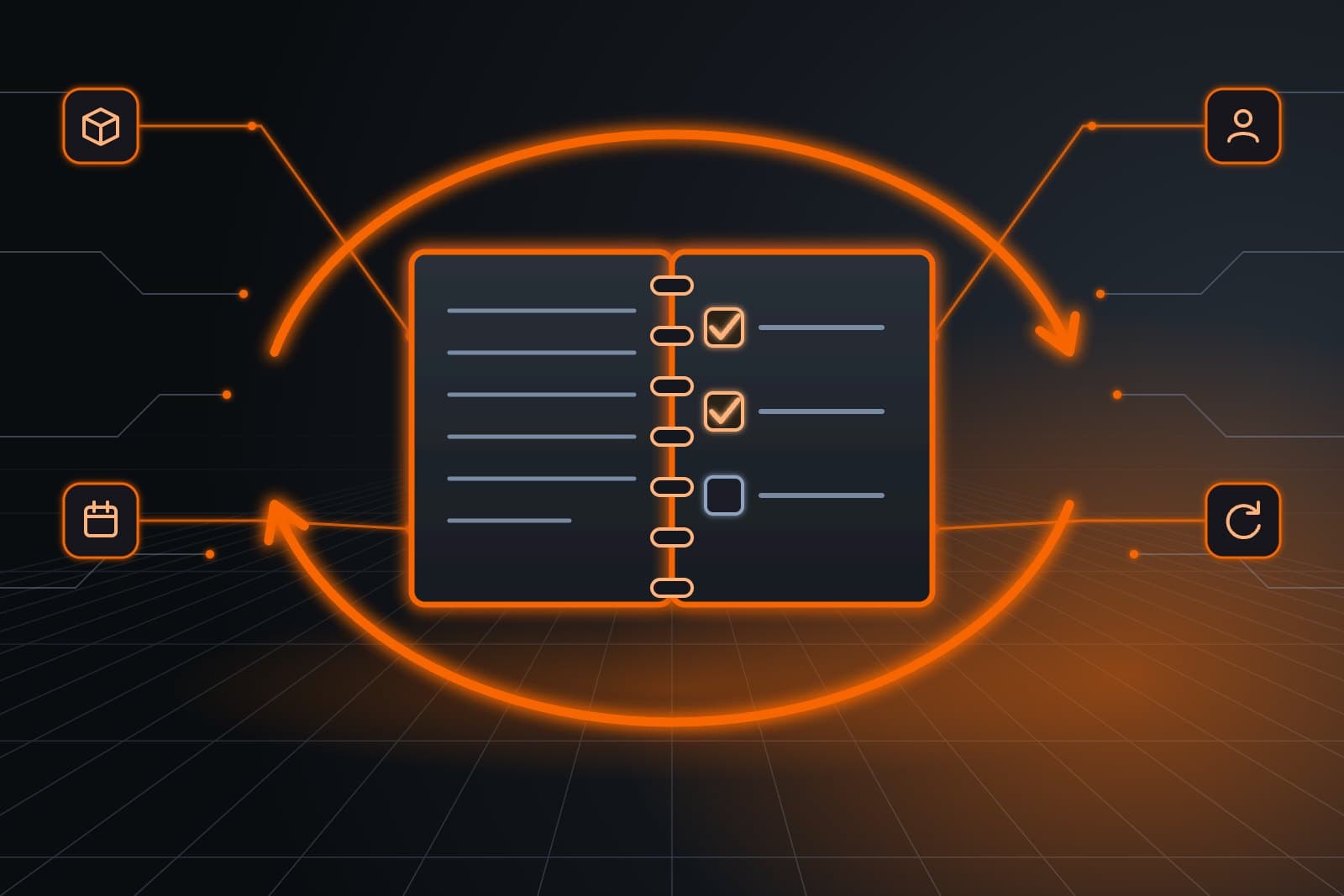
The AI RMF Core (opens in a new tab) sorts the work into govern, map, measure and manage. Govern sets the rules, map shows where AI is used and what could go wrong, measure checks how it behaves, and manage acts on the results. NIST treats govern as the thread through the other three.
For a small business, each function turns into something you can write down:
- Govern: written policies, clear roles and accountability. For you, one page on what each agent may do alone and who approves the rest.
- Map: what each AI is for, who it affects and where it could fail. For you, a list of your agents, their tools and the records they touch.
- Measure: tests and tracking before launch and while the AI runs. For you, a regular look at the log.
- Manage: plans to respond to, recover from and talk about incidents. For you, a pause switch with a named holder.
"Actions do not constitute a checklist, nor are they necessarily an ordered set of steps." — National Institute of Standards and Technology, federal standards lab, the AI RMF Core (opens in a new tab)
That line means there is no pass mark to hit, only evidence a reviewer reads and judges.
How does the pack map NIST AI RMF for small business?
For a company that runs agents, the framework becomes habits a log can show: written limits, regular checks and a named person who acts when something looks wrong. The table takes typical agent actions and shows the function each one serves and what the report records.
A control is a rule your business follows plus the step that enforces it, such as a second approval before a refund goes out.
| Agent action | Framework function | What the report shows |
|---|---|---|
| Bookkeeping agent holds a refund for a second approval | Govern | The rule, both names and their times |
| Supply agent drafts a purchase order that waits for price approval | Govern | Who signed off and what changed |
| An agent gets access to a new tool | Map | The updated list of tools each agent can reach |
| Inbox agent holds back a phishing email | Measure | The message, the hold and who reviewed it |
| Bookkeeping agent flags a bank entry that does not match | Measure | The mismatch and how a person resolved it |
| A person pauses an agent | Manage | Who paused it, why and when it restarted |
What does the report hold?
The evidence pack builds a report that groups each logged agent action under the framework function and the control it supports. That mapping runs as your agents work, so a current report is ready whenever someone asks. You read it before it goes out.
The report holds three kinds of material:
- Your written rules. What each agent may do alone, what waits for a person and who that person is.
- Your agent list. Each agent, the tools it connects to and the records it can reach.
- The activity behind each rule. Approvals, holds, flags and pauses from the log, with names and times.

The AI RMF Core (opens in a new tab) notes that documentation can improve transparency, human review and accountability. The report is that documentation, built from what your agents did.
What risk does the evidence pack answer?
The pack answers the risk of an agent moving money or committing to a vendor while nobody can later show who approved it. A bookkeeping agent that waits for a person on payments and refunds, or a supply agent that waits on prices and purchase orders, leaves the approvals a reviewer asks about first.
A federal notice from NIST's Center for AI Standards and Innovation (opens in a new tab) says agent systems can take actions that affect real-world systems, and can be deployed with little to no human oversight. It adds that they may be open to hijacking.
Written approvals and a pause switch keep a person in charge. The report shows those controls in use.
Request a call and bring your payment and refund rules. On the call, we will show the evidence pack mapping your agents' approvals, then check how it connects to your tools. Reviewers still reach their own view.
What do you need to get started?
The evidence pack works from three things you supply: the agents or AI tools you already run, the records they keep of their actions, and a person who owns the rules. You subscribe, we connect the pack to those records with you, and you read a sample report before any reviewer sees one.
- List your agents and AI tools. Name each one and the records it can reach.
- Write the rules. For each agent, write what it may do alone and who approves the rest.
- Connect the records. We check how the evidence pack reads each agent's log, and the pack then matches each kind of action to a framework function and a rule. An agent that keeps no usable record cannot be mapped, and we tell you so up front.
- Read a sample. You read a sample report with us before it goes to anyone outside.
- Send on request. When a customer, insurer or auditor asks, you send the current report.
After setup, the person who owns the rules makes every change.
What are the limits of the evidence?
The report never stands for a pass, because NIST's framework is voluntary and has no checklist to clear. It also stops nothing: it maps what agents did after they did it. Blocking a bad action before it runs is the job of a separate product, covered in AI Agent Guardrails: A Runtime Layer That Checks Each Action.
NIST's release on attacks against AI (opens in a new tab) says no foolproof way yet exists to protect AI from misdirection. So give every agent only the access its job needs, and keep payments, prices and filings waiting for a named person.
It is not legal advice either. A contract or a policy may ask for more, and your lawyer or the reviewer decides what that is.
An insurer's questions about AI
Example: a commercial insurance agency's review
Barnaby owns a commercial insurance agency. He runs a bookkeeping agent and an inbox agent, with the evidence pack mapping both.
His agency's own insurer sent a review form asking which AI touches client records, who approves its actions and how the agency would stop it.
His office manager pulled the current report. It showed refund approvals under govern, phishing the inbox agent held back under measure, and a pause after a misfiled message under manage.
Barnaby attached the report to his answers. The insurer still makes its own call, but he answered from records he could show.
Frequently asked questions
Who might ask a small business for AI evidence?
Anyone who relies on your business can ask: a larger customer reviewing you as a vendor, an insurer, an auditor or a partner. Each wants to know how you control the AI that touches their data or money.
Does the evidence pack work with the agents we already run?
Yes, the evidence pack can map the agents and AI tools you already run, whoever built them. It can only map activity that an agent or tool records.
Staff use of AI that leaves no record stays outside it. On a call, we check how it connects to your tools, and we do not promise it connects to every one.
Does the report cover the whole framework?
The report covers the parts of the framework your agents' logged activity touches, which may not be all of it. The AI RMF Core (opens in a new tab) lets each user apply its functions to suit its own needs, resources and capabilities.
What happens when the log shows a mistake?
A mistake stays in the report as it happened, next to what a person did about it. On an append-only log, a fix is added as a new entry beside the mistake.
That matches what the manage function asks for: incidents tracked, answered and recovered from.
Next step
Request a call and bring the last question someone asked about your AI. On the call, we will show how the evidence pack answers it from your agents and AI tools, then check how it connects.
Our standards
- The examples in our guides are illustrations, not customer stories.
- Your AI runs on private and on-premise models, not public AI tools. Nothing you give us is used to train AI models.
- Agents are built so each action is logged in a record that shows any later edit.
- Texts go only to people who gave you permission, and every message says how to stop.
- If anyone may be hurt or in danger, the only instruction an agent gives is to call 911.
- Depending on the investment package you choose, you get either the right to use the software we build for you or full ownership of it.
- We work from the Kansas City metro and meet owners face to face or by video call.
- Same team. Same jobs. More capacity.
About the ScaleAlphaSi team
ScaleAlphaSi is a Kansas City AI advisory firm specializing in Advanced Marketing and AI Engineering. Our team drives demand through SEO, AEO, GEO and paid ads management. Once that demand arrives, we build specialized AI agents to scale operations for profitability. Each guide draws on engagements with owners and operations teams, covering where to start, where people stay in charge and how to scale one workflow at a time.
Meet the Team