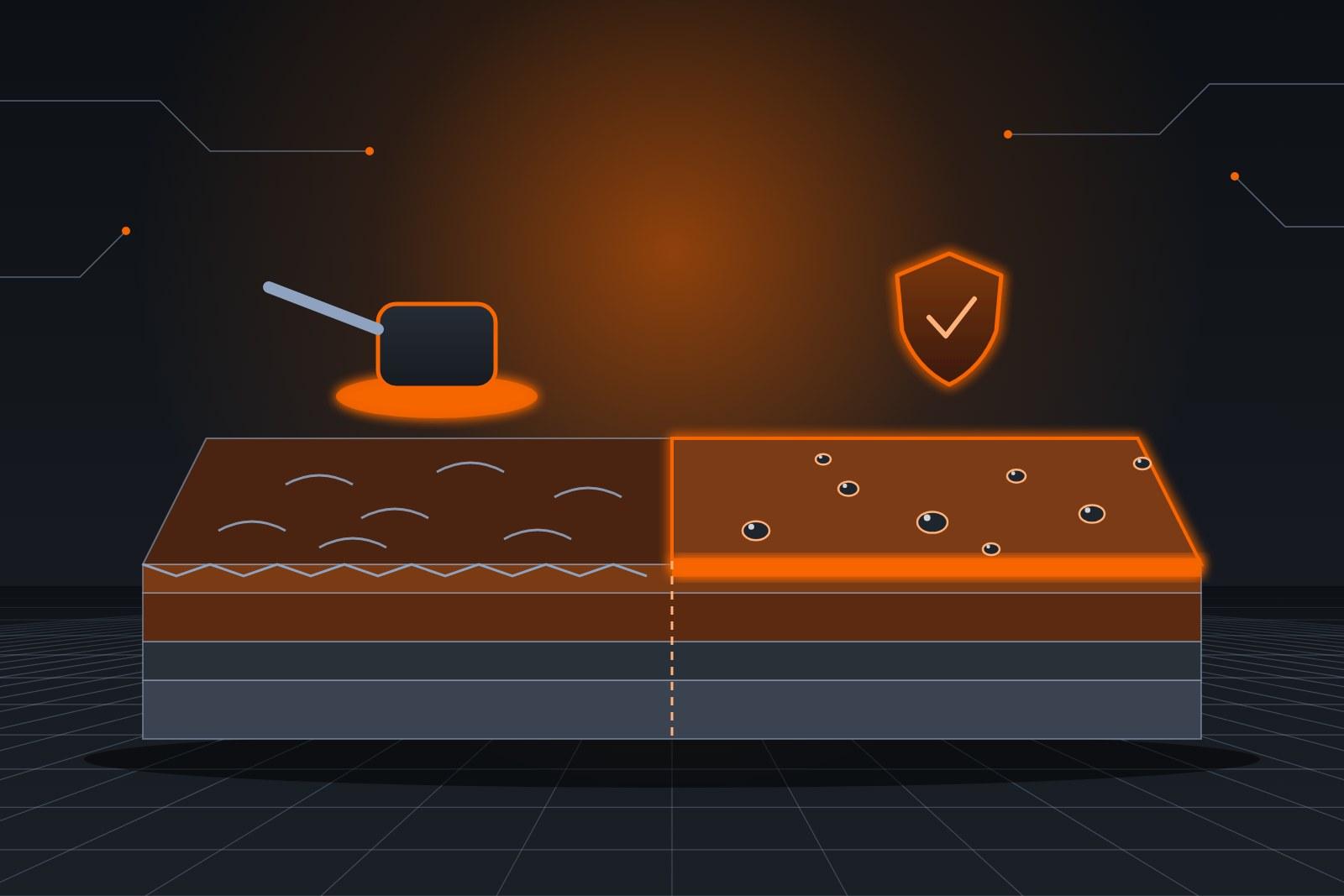
Paint correction vs ceramic coating is the difference between repair and protection. Correction polishes defects out of the clear top layer of paint, and a coating seals the result under a hard, glossy shell.
The two are often sold together, with correction first, since a coating would seal in any swirl marks.
The price side lives in our guide to auto detailing quotes. Here the goal is a tier sheet a customer can compare at a glance and the Sales Agent can walk through with them.
What does paint correction fix?
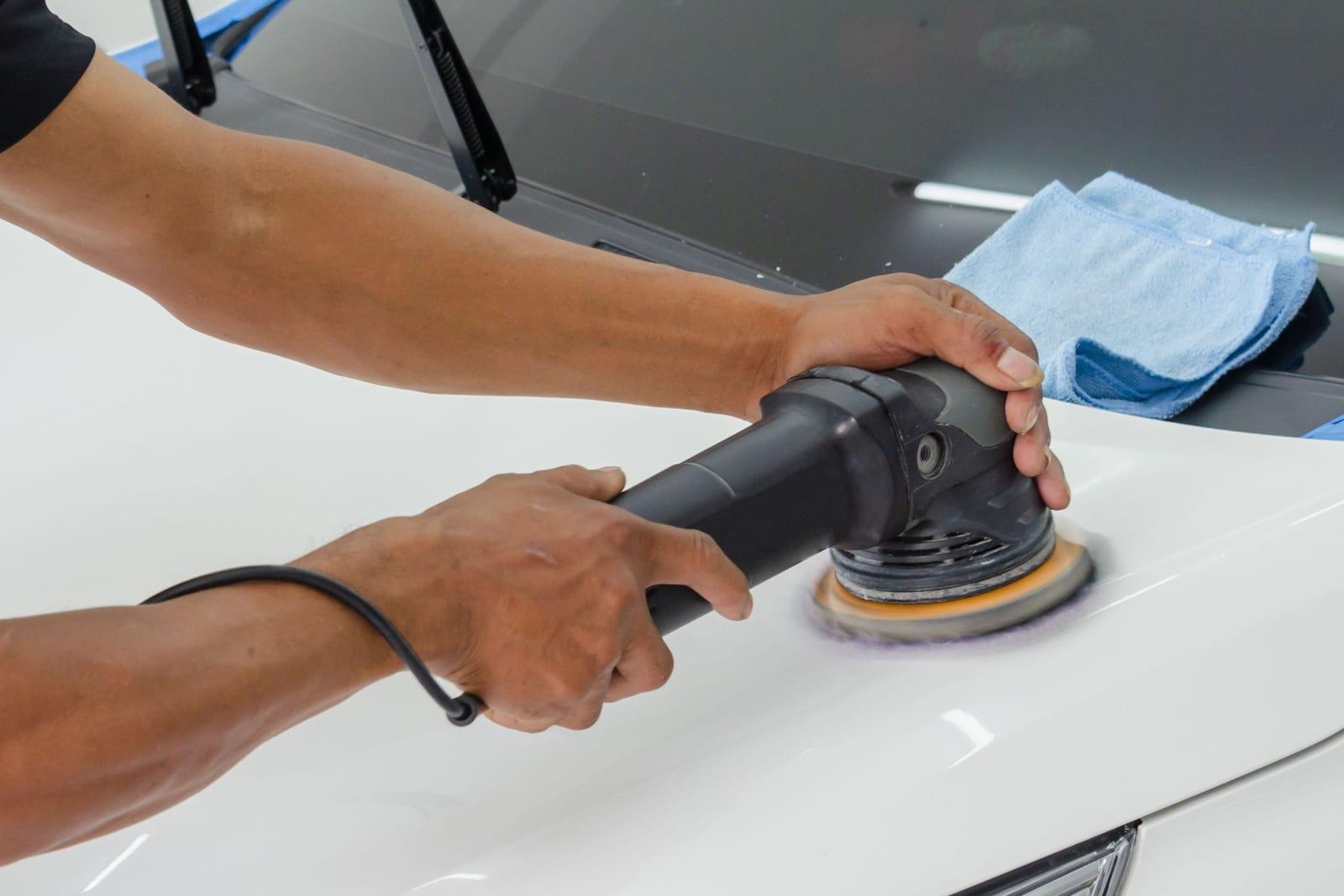
Machine polishing removes swirl marks, light scratches, haze and water spot etching from the clear coat on top of the color. A polisher levels the surface until it reflects cleanly again. Each pass takes off a little clear coat, so the detailer measures before cutting deeper.
- One-step polish: a single pass that brightens the finish and clears light haze.
- Two-step correction: a cutting compound first, then a finishing polish.
- Multi-step correction: extra cutting passes for heavy defects, chosen panel by panel.
A scratch that cuts through the clear coat needs touch-up paint or panel work instead. No polish can level it.
What does a ceramic coating add?
A hard, thin layer bonds to the paint and sheds water, so routine washes go faster. It also slows etching from bird droppings and hard water spots. How long it lasts depends on the product, the prep and the car owner's upkeep.
A coating cannot stop rock chips, deep scratches or swirls from a careless wash. It protects the finish it sits on, which is why the paint under it matters.
What should each tier line tell the customer?
A tier sheet works when every level answers the same questions in the same order, so a customer can compare without a call. Plain names help customers more than product codes. Each line should also say what the tier leaves out.
| Question | Paint correction | Ceramic coating |
|---|---|---|
| What does it do? | Removes defects from the clear coat | Protects the finish under a hard layer |
| What does it fix? | Swirls, haze and light scratches | Nothing already in the paint |
| What will the customer notice? | Depth and a sharper reflection | Faster washes, with water that beads |
| What does it need after? | Gentle washing | A wash plan and periodic checks |
| Who picks the level? | The detailer, after measuring | The detailer, from the paint and the goal |
Each tier line on the sheet can follow the same five steps:
- Name it plainly. A name like "Gloss refresh" or "Full protection" reads better than a code.
- State the prep. Wash, decontamination and the polishing stage, as you sell them.
- State the protection. Sealant, entry coating or a multi-layer coating.
- State the upkeep. The wash plan and the check-ins you recommend.
- State what stays out. Wheels, glass, trim or interior, if the tier skips them.
List only tiers you are glad to sell. The FTC's guide against bait advertising (opens in a new tab) describes an insincere offer made to switch buyers to something else.
Should paint correction or ceramic coating come first?
Defects get fixed before protection goes on, because a protective layer locks in whatever lies beneath it. On a new car with clean paint, a light polish may be enough before coating. The detailer makes that call after seeing the paint in person or in good photos.
Polishing a finished coating removes it along with the defects, so the order matters.
What can the agent explain on its own?
Tier questions get answered straight from the detailer's sheet, including the prep, the upkeep and what is left out. The Sales Agent cannot pick a stage, judge the paint or name a price. Those calls go to the detailer with the thread attached.
| Customer asks | Agent | Detailer |
|---|---|---|
| What separates the tiers? | Explains from the sheet | Wrote the sheet |
| Does my car need two steps? | Collects photos | Decides after seeing the paint |
| How long will it last? | Repeats the sheet's wording | Owns any further answer |
| Can I get a better price? | Passes the request along | Decides |
Where ScaleAlphaSi fits in the sale
ScaleAlphaSi sets up the Sales Agent with your tier sheet, so it answers comparison questions in your words at any hour. When a customer is ready, it gathers the photos for an auto detailing quote request and hands a summary to the detailer.
The agent follows up on open quotes on the schedule you set, and it never offers a discount on its own.
Book a free consult meeting to load your tier sheet into a working agent.
A buyer torn between two tiers
Example: a new sedan with dealer swirls
A customer buys a new blue sedan and notices fine swirls under gas station lights. She texts a detail shop asking whether she needs correction, a coating or both.
The Sales Agent replies and explains the "Gloss refresh" and "Full protection" tiers from the detailer's sheet, then asks for daylight photos.
The photos show light swirls across the hood and doors, likely from a careless wash at the dealer. The detailer reads the summary and picks a one-step polish under the entry coating.
The detailer sets the price, and the Sales Agent sends the quote with two drop-off dates. The customer asks if the coating will last for years, and the agent repeats the sheet's own wording with no promise attached.
Frequently asked questions
Can a coating hide swirl marks?
A coating can make swirls slightly less obvious at first, but it does not remove them. They stay visible under strong light, which is why correction usually comes before the coating goes on.
Is paint correction safe on thin paint?
Thin paint limits how much correction is safe, because every pass removes some clear coat. The detailer measures with a gauge first and may choose a lighter polish, or leave a defect alone, to protect what remains.
Does a brand-new car need correction?
A brand-new car often has light marks from transport or a dealer wash, so a light polish before coating is common. The detailer decides after seeing the paint, since some new cars need no correction at all.
Does a car with a coating still need wax?
Wax is usually unnecessary on top of a ceramic layer, and the product's own instructions say what to use instead. The detailer's care sheet lists those products, and the Customer Agent sends it to coated-car owners unchanged.
Next step
Book a free consult meeting and bring your current tier sheet. We will turn it into answers the Sales Agent can give, then you can run it free for 30 days on your own inquiries.
Our standards
- The examples in our guides are illustrations, not customer stories.
- Your AI runs on private and on-premise models, not public AI tools. Nothing you give us is used to train AI models.
- Agents are built so each action is logged in a record that shows any later edit.
- Texts go only to people who gave you permission, and every message says how to stop.
- If anyone may be hurt or in danger, the only instruction an agent gives is to call 911.
- Depending on the investment package you choose, you get either the right to use the software we build for you or full ownership of it.
- We work from the Kansas City metro and meet owners face to face or by video call.
- Same team. Same jobs. More capacity.
About the ScaleAlphaSi team
ScaleAlphaSi is a Kansas City AI advisory firm specializing in Advanced Marketing and AI Engineering. Our team drives demand through SEO, AEO, GEO and paid ads management. Once that demand arrives, we build specialized AI agents to scale operations for profitability. Each guide draws on engagements with owners and operations teams, covering where to start, where people stay in charge and how to scale one workflow at a time.
Meet the Team